

TP-Link Announces Archer 8 Ultra: First Router with Wi-Fi 8 Support
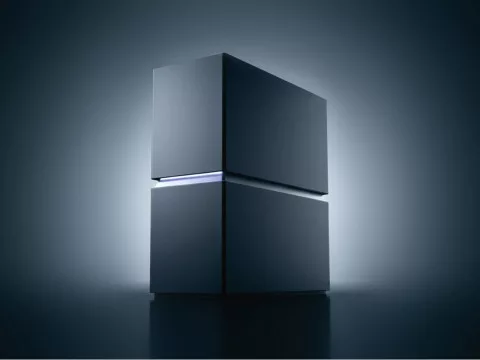
At IFA 2026, TP-Link announced its first router supporting the core technologies of the next-generation wireless standard, Wi-Fi 8. Named the Archer 8 Ultra, the device shifts the focus from merely increasing peak speeds to achieving "Ultra-High Reliability" (UHR), ensuring consistent connection quality in real-world environments.
The Wi-Fi 8 standard is based on the IEEE 802.11bn specification, which is currently in the Draft 2.0 stage as of September 2026. While final standard approval is not expected until 2028, TP-Link has positioned the Archer 8 Ultra as an early adopter of these emerging technologies. The primary goal of the new standard is to maintain stable throughput and low latency even in congested areas or at the edges of coverage.
At launch, the Archer 8 Ultra will feature several key technologies also highlighted by Qualcomm:
- UEQM (Unequal Modulation) for adaptive modulation based on signal conditions;
- New MCS (Modulation and Coding Scheme) to reduce sudden speed drops;
- 2×LDPC (Enhanced Low-Density Parity-Check) for stronger error correction;
- NPCA (Non-Primary Channel Access) to utilize secondary channels when the primary one is congested.
TP-Link intends to roll out additional Wi-Fi 8 features via OTA software updates between 2027 and 2028. These include DSO (Dynamic Sub-channel Operation), ELR (Enhanced Long Range) for better distance stability, and DRU (Distributed Tone Resource Unit). Furthermore, multi-access point coordination technologies like Co-TDMA, Co-SR, and Co-BF are planned for future implementation.
Internal testing by TP-Link claims the Archer 8 Ultra achieves up to 33% higher throughput at mid-to-long ranges compared to Wi-Fi 7, with a 24% improvement in throughput consistency under interference. As with all manufacturer-claimed data, actual performance may vary depending on the environment and connected devices.
Pre-orders for the Archer 8 Ultra opened on September 30 in select regions, including the UK, Germany, Australia, and Canada, with a wider rollout expected to follow.
Флешка
