

The Sinking City 2 Review – Eldritch Survival Horror Done Right
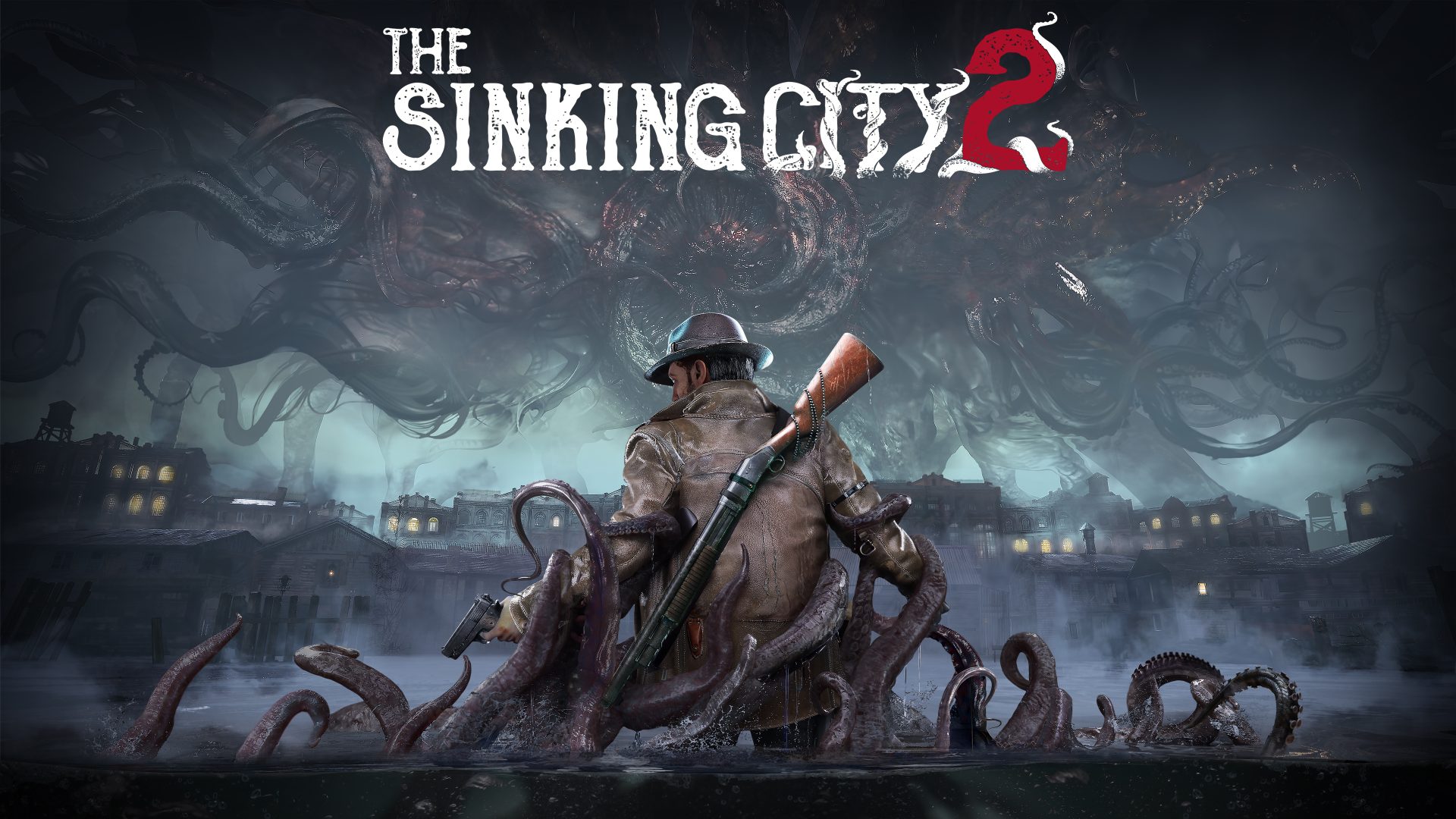
The Sinking City 2
August 18, 2026Platform
PC, PlayStation 5, Xbox Series S/XPublisher
FrogwaresDeveloper
FrogwaresThe original The Sinking City has consistently held a special place in my gaming memories ever since I first previewed it in 2019. Back then, our site awarded it a solid 7.8 out of 10 score. It was a title I genuinely loved exploring on my own terms, and I had always looked forward to seeing where the universe would go next. Now, with the launch of The Sinking City 2, that long-awaited opportunity has finally arrived.
My admiration here extends far beyond game design alone—it equally belongs to the development team behind it. Frogwares has persevered through unprecedented adversity. On top of navigating prolonged legal disputes with former publisher Nacon/Bigben Interactive, the studio has endured the catastrophic reality of the full-scale Russian invasion of Ukraine. In a dedicated team numbering just over 80 developers, 17 staff members suffered the destruction or severe damage of their residences, while 14 have enlisted or are currently on active duty in the Ukrainian Armed Forces. Across 43 grueling months of development, daily workflows were disrupted by power grid blackouts, loss of heating, and the omnipresent threat of wartime devastation.
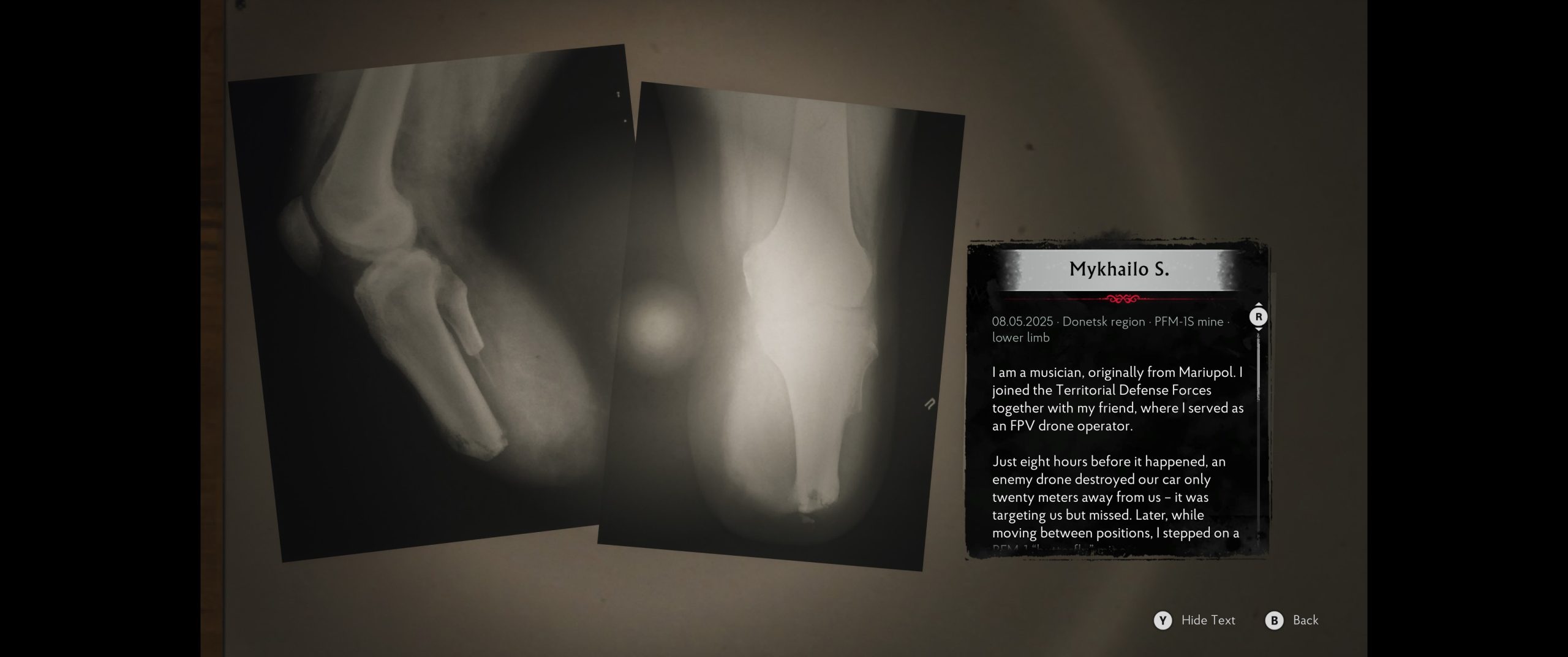
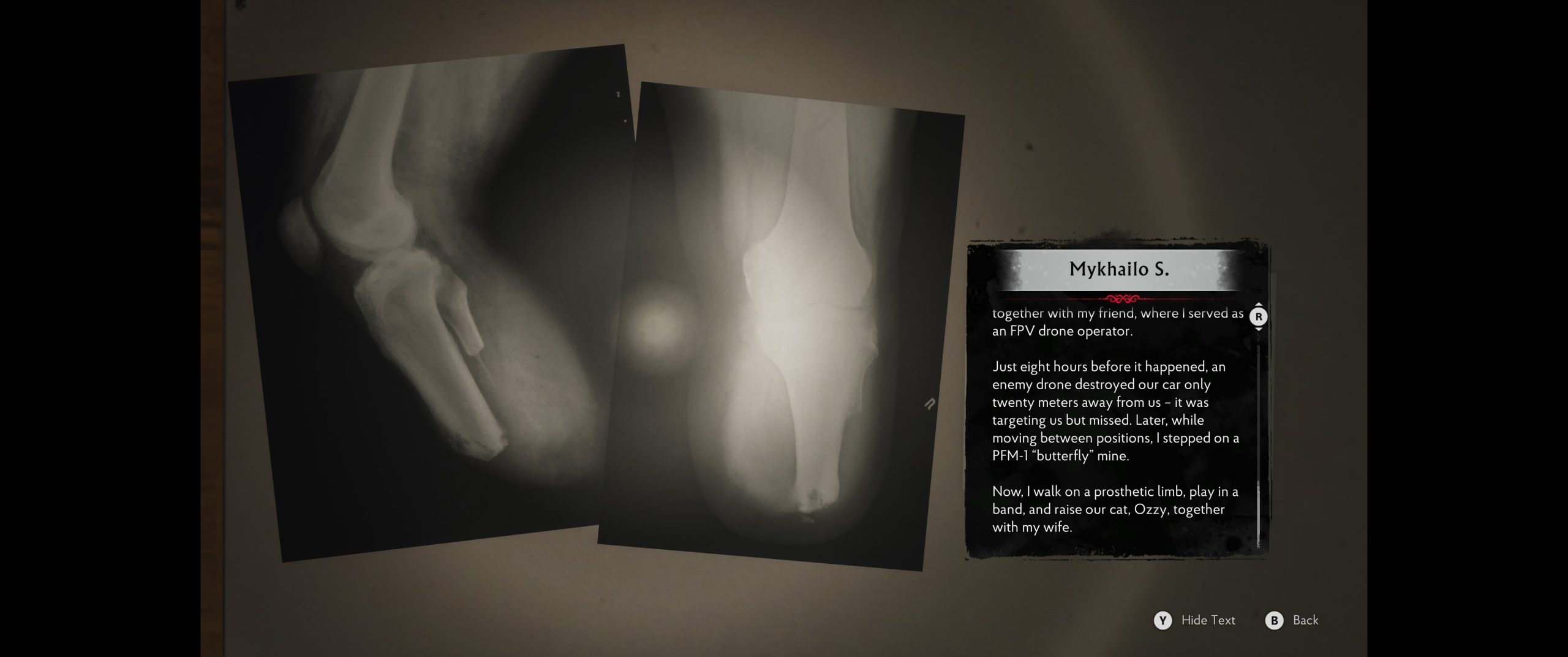
During the campaign's third chapter, you make your way through a hospital. Inside one of the examination rooms lies an understated yet deeply touching Easter egg: medical X-rays and case files representing authentic wartime experiences from real individuals known to the dev team. Reading through them is a profoundly humbling and emotional moment that anchors the game to reality. Below is an excerpt before we examine the gameplay systems in detail.
To set expectations right away: players searching for the sprawling open-world freedom and peculiar rough-around-the-edges mechanics of the debut game will find a very different philosophy here. Conversely, anyone yearning for a disciplined, polished, and atmospheric horror experience is in for a treat. The Sinking City 2 abandons the flooded streets of Oakmont in favor of the iconic, mist-shrouded city of Arkham. Progression is constructed around distinct, intricately designed standalone stages connected via direct transitions rather than manual open-world travel.
These individual zones still feature impressive scale, mirroring the dense interior layouts seen in contemporary survival horror benchmarks like the Silent Hill 2 remake's Brookhaven Hospital. In fact, Silent Hill 2's DNA is evident throughout the sequel's deliberate shift toward pure survival horror—defined by strict inventory limitations, tense pacing, and scarcity-driven resource management.
While you could rush through primary objectives, taking that shortcut would mean bypassing substantial world-building, compelling secondary investigations, vital crafting components, and equipment upgrades that make surviving easier. This is an unforgiving adventure centered on endurance. For those solely invested in the narrative, the lowest difficulty setting even provides an option to toggle complete combat invulnerability.
That said, the optimal way to experience the title is by setting combat to Standard and tuning investigations to "Brainy." While the deduction mechanics do not reach the cerebral complexity of Frogwares' classic Sherlock Holmes adventures, they strike a satisfying balance that encourages analytical thinking without grinding momentum to a halt.
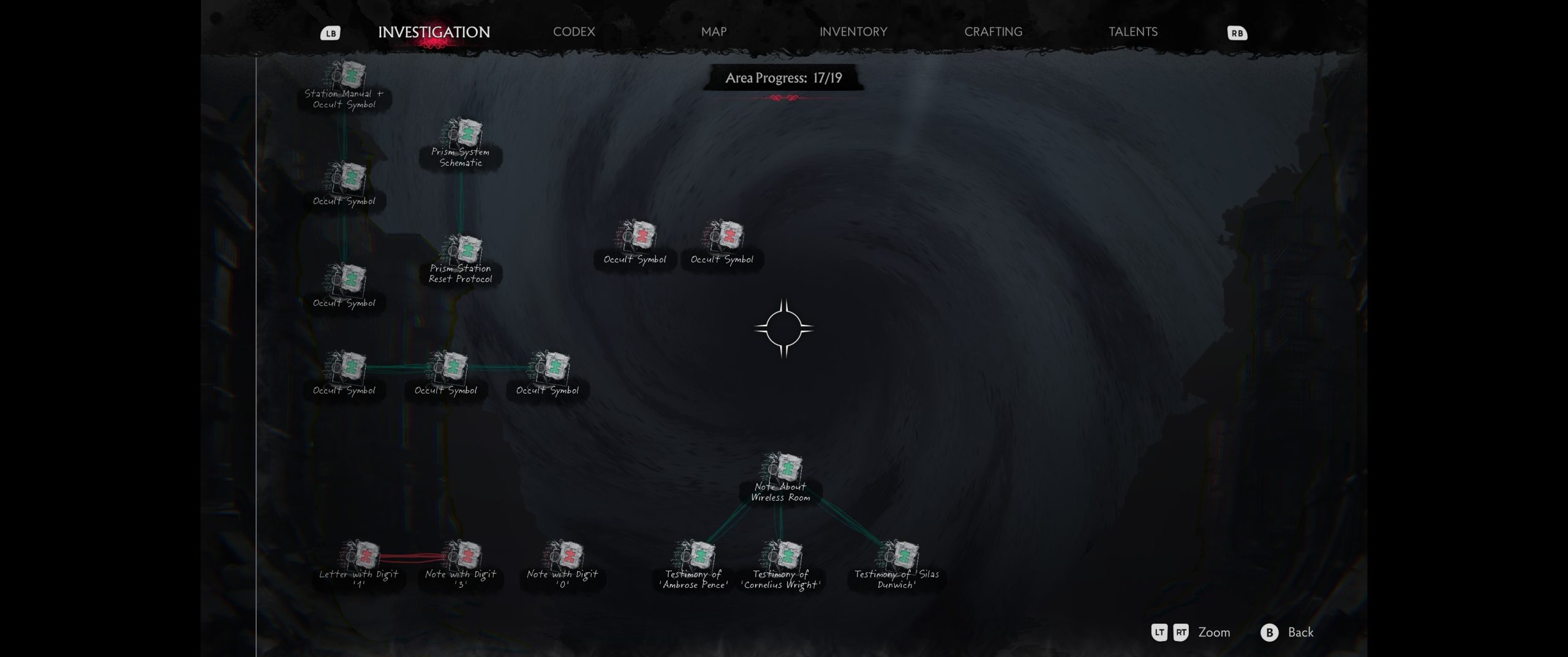
Case-solving revolves around scouring the environment for evidence that populates the "Investigation Space." Once players deduce correct associations between clues, linked nodes illuminate in blue, allowing you to piece together the broader narrative mystery. Casual difficulty automatically highlights answers, but manually piecing together the evidence proves far more rewarding.
Thorough exploration directly benefits your character build by rewarding Dream Shards, which unlock passive perk slots (up to four active perks simultaneously). These modifiers provide perks such as reduced damage from specific monstrosities or bonus yield when crafting ammunition. Additionally, discovering occult oddities yields Eldritch Points, which can be redeemed for specialized abilities, alternate character outfits, and concept art.
Navigating and scavenging is streamlined by a clear minimap system: rooms with undiscovered items remain highlighted in red, shifting to blue only once an area has been completely cleared. This clean visual cue supports the game's survival loop without breaking narrative immersion.
Combat takes clear inspiration from the recent Resident Evil and Silent Hill 2 remakes. While certain combat encounters are mandatory, evading combat is frequently the smarter tactical decision. Munitions are scarce, and wasting bullets on non-essential targets can leave you stranded in later, far deadlier skirmishes.
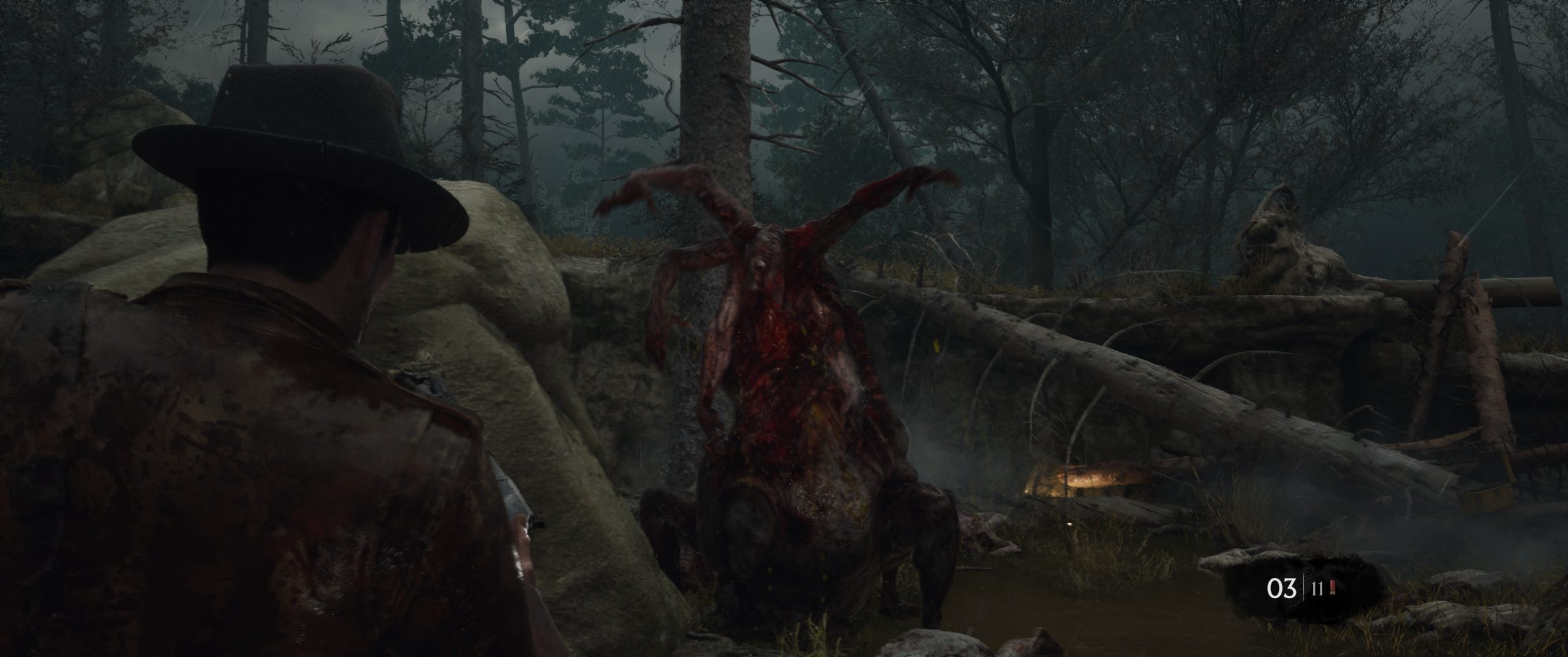
Although a basic melee strike exists, relying on it usually means your positioning has already failed and fleeing is your safest play. The tension is amplified by a very tight grid inventory. Heavy weapons occupy multiple slots, healing supplies do not stack, and essential mission objects consume identical pack space.
At times, this inventory restriction borders on overly punitive. Having to backtrack across hostile hallways to reach the universal storage trunk in safe rooms can disrupt the otherwise stellar flow of exploration.
Beyond inventory constraints, only minor issues stand out. A single mandatory puzzle felt disconnected from the game's usual design logic, halting progression for roughly half an hour of aimless searching. Furthermore, the overall scale is tighter: spanning six major zones and around 13 hours of total playtime, with boat travel relegated to a few linear narrative passages early on.
Yet, what The Sinking City 2 surrenders in raw square mileage, it more than compensates for with superior pacing, refined mechanics, and unmatched Lovecraftian atmosphere. The story feels deeply personal, the creature designs are visceral, and Arkham provides a haunting, rain-drenched stage for cosmic horror.
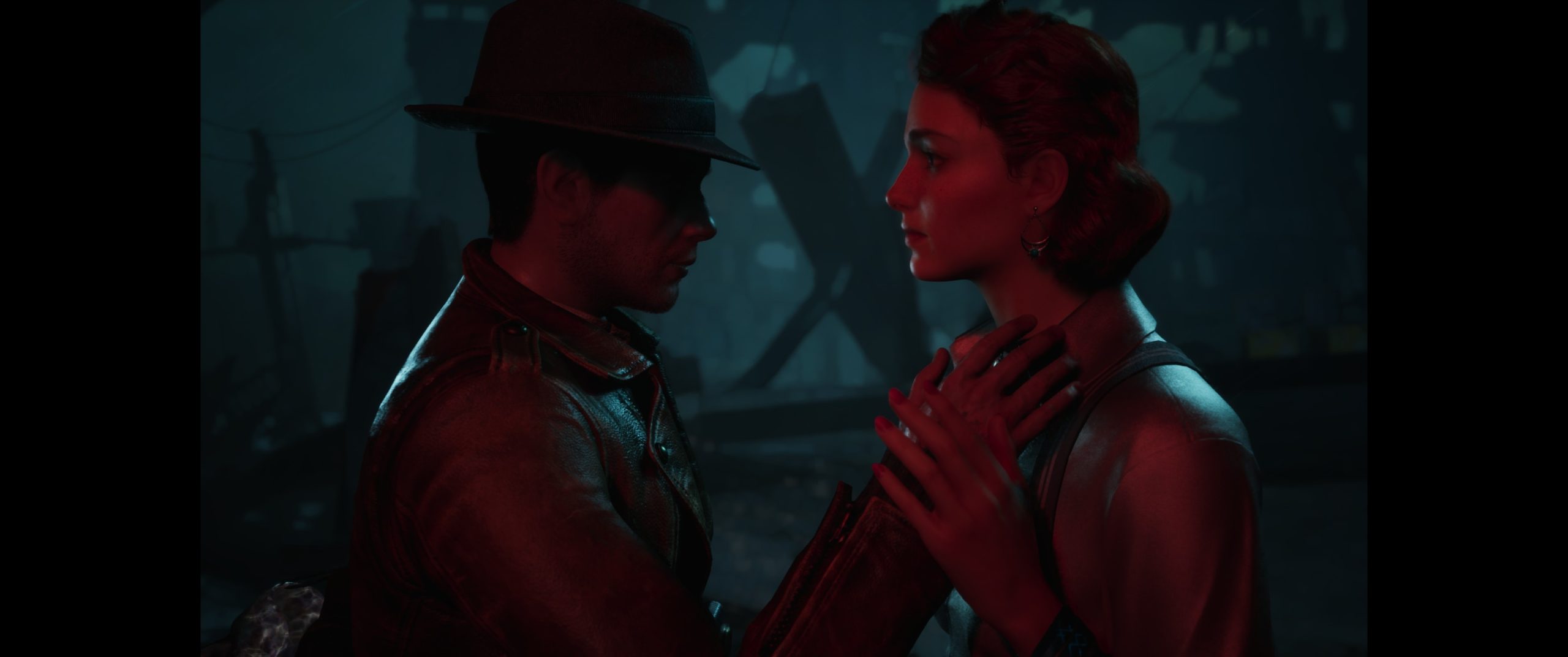
The audiovisual presentation deserves high praise. Sound design is exceptionally layered—from the delicate crunch of frost and buzzing flies to the unsettling gurgle of rising floodwaters. Character models avoid the uncanny valley, while movement and gunplay deliver tactile, grounded feedback.
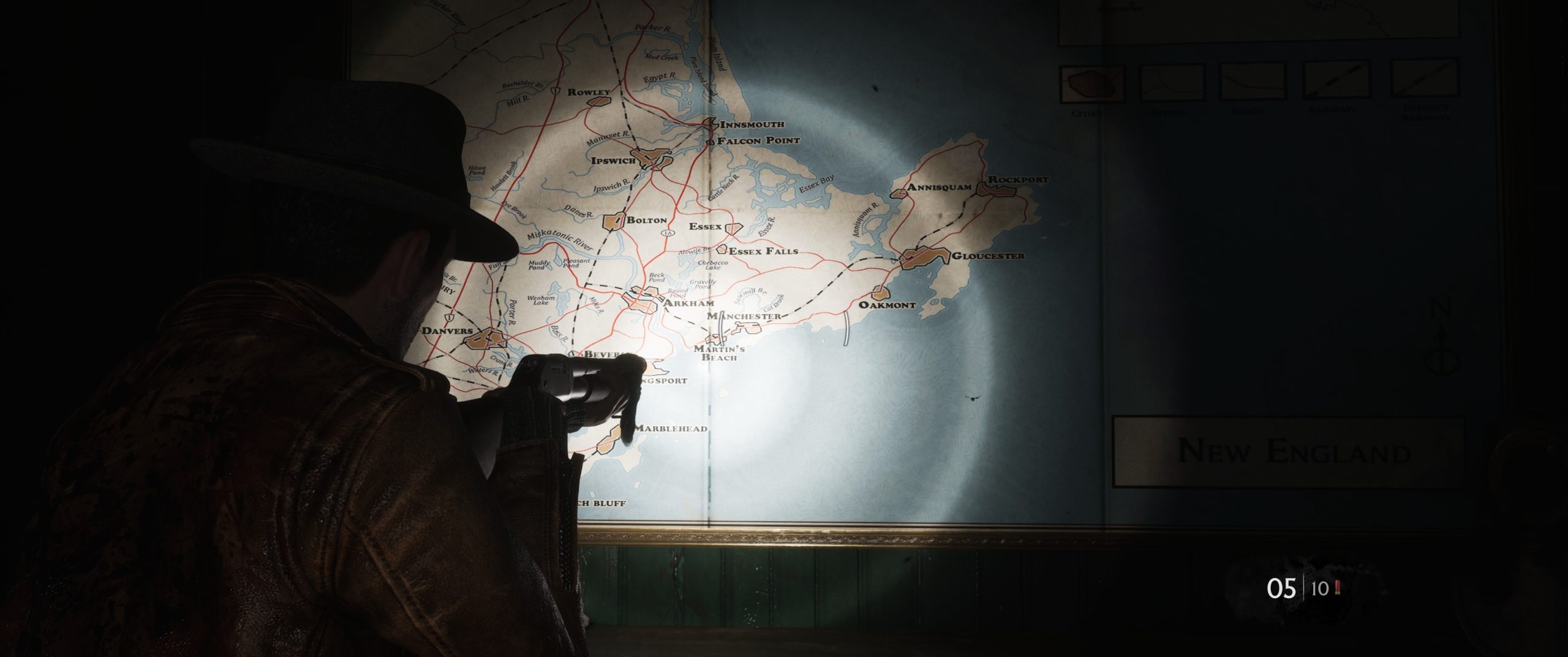
All factors considered, The Sinking City 2 is a resounding triumph. It represents a more mature, focused, and mechanically sound evolution over its predecessor. With gripping combat, dense atmosphere, excellent world-building, and an included New Game Plus mode that begs for a second run to unearth missed secrets, this is one of the most compelling cosmic horror titles in recent years.
PC version reviewed. Review code provided by the publisher.
The Sinking City 2
The Sinking City 2 represents a much tighter, narratively focused survival horror experience compared to the original. Bolstered by fantastic world-building, challenging survival encounters, meaningful exploration, and an engrossing story supported by memorable characters, Frogwares' sequel is a confident leap forward that redefines the franchise's direction with style.
- Gripping survival horror core with rewarding exploration.
- Weighty, deliberate combat where evasion is a legitimate tactic.
- Masterful Lovecraftian atmosphere elevated by stellar audio and visuals.
- Compelling narrative filled with well-written, multifaceted characters.
Pros
- The linear structure may disappoint fans of wide open-world investigation.
- Overly restrictive inventory capacity with non-stacking consumables.
Cons
Травник
