TCL CSOT Unveils Ultra-Low Power 14-inch Notebook LCD: Sub-1W Consumption and 100g Weight
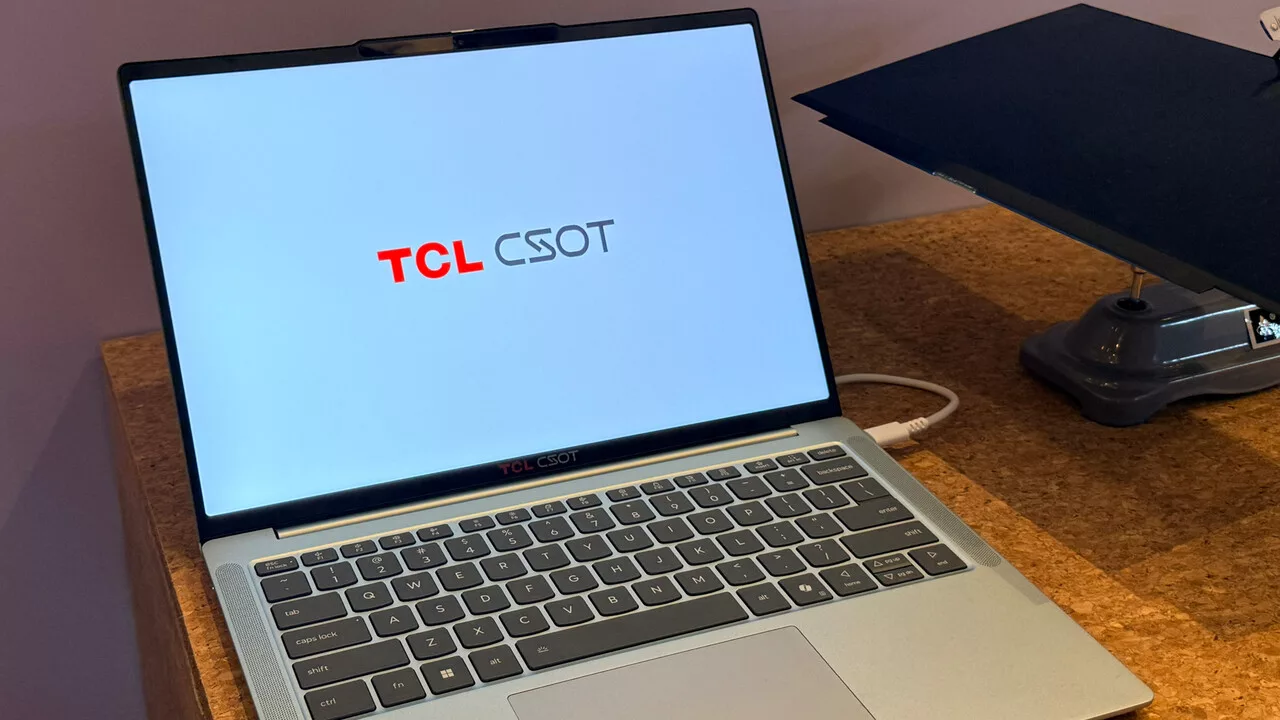
At the Global Display Tech-Ecosystem Conference 2026 (DTC 2026) in China, TCL CSOT presented a prototype 14-inch notebook LCD that aims to drastically reduce energy consumption. The panel, showcased on a Lenovo notebook, reportedly consumes less than 1 watt, targeting a significant increase in laptop battery life through advanced oxide technology and high light transmittance.
The display, described as an "Oxide 1-120 Hz ultra-low power panel," utilizes a proprietary "FTT-high-transmittance pixel design." According to reports from Notebookcheck, the Liquid Crystal Module (LCM) power consumption was stated to be under 1 watt. While this figure is impressive, its real-world impact remains contingent on specific operating conditions, such as brightness levels and the current refresh rate. For context, standard 14-inch notebook displays typically consume between 3 and 4.5 watts, while high-resolution or high-refresh-rate models can exceed 8 watts.
Adaptive Refresh Rates and High Transmittance
The prototype features a resolution of 1,920 × 1,200 pixels and supports an adaptive refresh rate ranging from 1 Hz to 120 Hz. This variable frequency allows the panel to drop to 1 Hz when displaying static content, significantly minimizing power draw. This approach, based on Oxide-TFT technology, is not entirely new; similar low-refresh-rate implementations have appeared in some Dell laptops, and Samsung recently showcased an OLED panel with a 1 to 120 Hz range at Computex 2025.
Beyond refresh rate adjustments, TCL CSOT is leveraging high light transmittance to boost efficiency. The panel is expected to reach a maximum brightness in the 300 to 400 cd/m² range.
A Lightweight Solution
In addition to power efficiency, the panel is designed for portability. The prototype weighs only 100 grams, a substantial reduction compared to standard 14-inch IPS-LCD panels, which typically weigh between 250 and 350 grams. This reduction in mass is intended to contribute to thinner and lighter notebook chassis.
Availability and Market Outlook
While specific release dates have not been confirmed, industry expectations suggest that this technology could enter the market during 2027. It is important to note that these are prototype demonstrations; actual consumer implementation may vary based on final manufacturing processes and specific hardware configurations.