
Tales of Eternia Remaster: A Return to the Roots of a Legendary Series
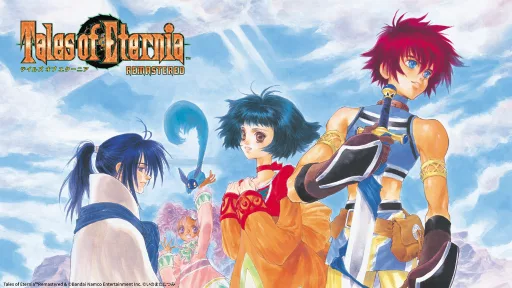
The release of Tales of Eternia Remaster by Bandai Namco Entertainment is more than just another remaster; it is a homecoming. The original PlayStation release in 2000 served as a pivotal moment for the franchise, establishing the foundational mechanics seen in modern entries. After 26 years since its debut and over two decades of waiting for a proper update, this remaster finally brings the classic to modern hardware.
A Legacy That Defined the Future
To appreciate the remaster, one must understand the impact of the original Tales of Eternia. Released as an anniversary title, it introduced elements that became series staples: extensive voice acting for storytelling and a dynamic combat system where battles do not halt during most special techniques.
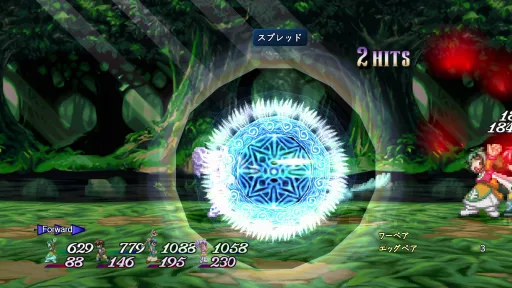
While the combat may feel simplistic compared to contemporary RPGs, it maintains an exceptional tempo. The visual effects and sound design (SE) provide a visceral sense of impact; the sound of defeating an enemy, in particular, remains one of the most satisfying in the series. Based on the PSP version, the remaster significantly upgrades graphics and audio, ensuring a smooth experience on modern systems.
Mastering the Mechanics
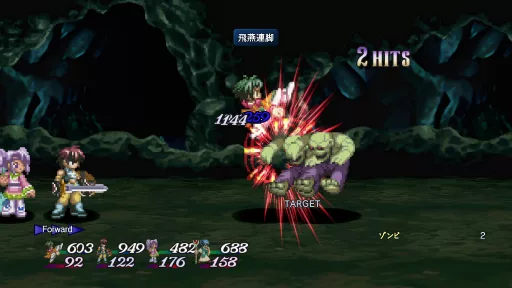
For newcomers, understanding the combat flow is essential. The core loop involves transitioning from standard attacks to special skills and finally to powerful 'Ougi' (ultimate techniques). A notable detail is the character Ridd, who can extend his combos up to three hits by mixing different attack types.
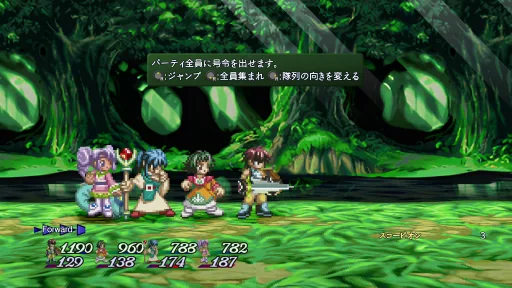
The remaster introduces much-needed visual clarity, with distinct icons for special skills and ultimate techniques. Additionally, the 'Orders' and 'Tactics' systems—while not strictly mandatory—are vital for managing party formations and AI behavior, allowing players to optimize their strategy during intense encounters.
A World of Deep Lore
The world-building in Tales of Eternia is remarkably intricate. The setting of two opposing lands, Inferia and Celestia, is enriched by environmental details like weather patterns tied to different spirits. A standout feature is the fictional language, Melniks. It follows specific linguistic rules that allow for translation, though the game often leaves certain signs and dialogues untranslated to maintain mystery.
To truly experience the narrative, players should utilize the 'Camp Skits.' These interludes, occurring during field camps, do not advance the main plot but are crucial for understanding character motivations and relationships. It is through these moments that the game transforms from a mere mechanical experience into a living story.
Hidden Depths and Verdict
The remaster preserves the sense of discovery. While it adds guidance icons for sub-events and character skills, it deliberately avoids revealing everything. Some elements, like the 'Secret Arts,' have activation conditions that are not explicitly stated in-game, preserving the sense of mystery that defined the original era.
The depth of the original is perhaps best illustrated by a recent community discovery: by adjusting the RGB settings in older versions, players could turn the character Quicky gold. While such manual color manipulation isn't a feature in the remaster, it speaks to the sheer amount of hidden content baked into the game's DNA.
Verdict: Tales of Eternia Remaster strikes a perfect balance between respecting the original and providing modern convenience. It doesn't attempt to rewrite history but makes it accessible. It is an essential title for those wanting to understand the lineage of the Tales of series and for veterans looking to relive the magic of classic RPGs.
Зануда
