

AI Boom Crowds Out PC and Smartphone Chips, Siltronic Warns
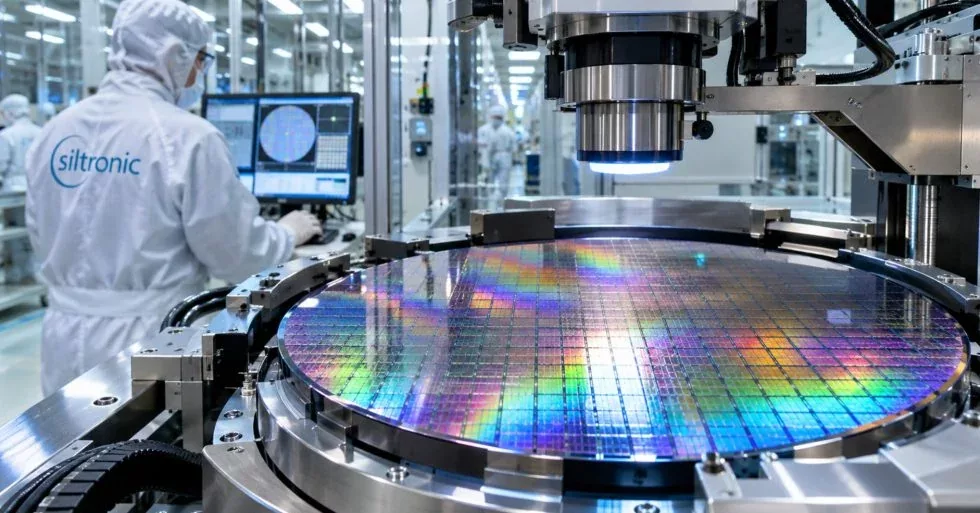
The global surge in AI data center construction is driving semiconductor industries toward new growth records, but this boom is not lifting all sectors equally. According to Siltronic, the massive demand for AI-specific hardware is increasingly monopolizing production capacities that were previously available for other applications, potentially leaving the PC and smartphone markets in the lurch.
In a statement to Reuters on November 4, 2026, Siltronic CEO Michael Heckmeier highlighted a growing conflict within the semiconductor supply chain. As AI data centers scale up, they require an unprecedented amount of hardware, which in turn consumes the manufacturing resources needed by traditional consumer electronics. This creates a situation where, despite existing demand in the PC and smartphone sectors, the actual availability of chips may be restricted because manufacturers are prioritizing more profitable clients.
The Economic Incentive of AI Hardware
The shift is driven largely by economics. Large-scale data center operators possess significant financial resources and are willing to pay premium prices for high-performance processors, memory chips, and networking components. For semiconductor manufacturers, this creates a strong incentive to allocate limited production capacity to these high-margin AI customers. Heckmeier suggests that the challenges facing traditional semiconductor markets are not solely due to weak demand, but rather to this increasingly restricted availability of manufacturing resources.
It is important to note that Siltronic itself does not produce finished processors or memory chips; the company specializes in high-purity silicon wafers, which serve as the foundational material for the entire industry. Because Siltronic sits at the start of the supply chain, it has a unique vantage point on how demand shifts across different manufacturing segments. However, this does not mean every PC or smartphone component is facing immediate shortages. The actual impact depends on specific manufacturing processes, the economic weight of individual customers, and the current utilization of production lines.
The Silicon Footprint of AI
The technical requirements of AI infrastructure are significantly higher than those of traditional computing. Heckmeier estimates that AI data centers require approximately three to four times the silicon area compared to conventional server environments. This is an industry-wide estimate rather than a fixed rule for every single server, as actual silicon demand varies depending on the specific hardware and data center architecture used.
Modern AI accelerators often feature massive die sizes or consist of multiple interconnected computing units. This is compounded by the need for numerous HBM (High Bandwidth Memory) chips, powerful server CPUs, and complex networking controllers. Large die sizes present a specific manufacturing challenge: the larger a single die is, the fewer chips can be harvested from a single silicon wafer. Furthermore, manufacturing defects become more impactful on larger chips, as a single defect can ruin a significant portion of the usable silicon area, further tightening the supply of high-quality wafers.
Siltronic's Financial Outlook
Siltronic's financial performance reflects this shifting landscape. In the third quarter of 2026, the Munich-based company reported revenue of €355.4 million, a 10.5% increase compared to the second quarter. This growth was primarily driven by increased sales volume in terms of wafer area, particularly for 300-mm wafers, as well as growing demand for 200-mm wafers. This growth helped offset negative effects from product mix and currency fluctuations.
- Q3 2026 Revenue: €355.4 million
- Revenue growth vs Q2: +10.5%
- Revenue (Jan–Sept 2026): €983.5 million
- Q3 2026 EBITDA: €81.3 million
- Q3 2026 EBITDA Margin: 22.9%
- Q3 2026 EBIT: -€42.4 million
- Q3 2026 Net Income: -€55.0 million
- Expected 2026 EBITDA Margin: 22% to 24%
Despite the revenue growth, the company's bottom line remains under pressure due to high depreciation on manufacturing equipment, resulting in a net loss of €55 million for the third quarter. To meet the rising demand for high-quality wafers, Siltronic is currently expanding its 300-mm wafer production capacity, specifically at its site in Singapore.
However, expanding semiconductor capacity is a long-term endeavor. Beyond the complex processes of crystal growth, mechanical machining, and polishing required for silicon wafers, there is a massive bottleneck downstream. Even if wafer production increases, the industry still relies on the capacity of subsequent stages, including lithography, etching, packaging, and final testing. Because these production stages cannot be expanded independently, bottlenecks at any single point in the supply chain can limit the overall output of finished chips.
In light of the improved demand and favorable currency effects, Siltronic has raised its full-year 2026 revenue forecast, now expecting revenue to remain roughly at the same level as the previous year, rather than the slight decline previously anticipated. The company also narrowed its expected EBITDA margin to a range of 22% to 24%. Heckmeier noted that there are currently no signs of a significant slowdown in AI demand, which leaves the availability of components for the PC and smartphone industries in a state of uncertainty.
The rapid expansion of the artificial intelligence sector is fundamentally reshaping the semiconductor landscape. According to warnings from Siltronic, a major player in the silicon wafer industry, the unprecedented surge in demand for AI-related hardware is creating a significant bottleneck in manufacturing capacity. This shift is not just a matter of increased production, but a potential displacement of existing market segments.
The squeeze on consumer electronics
The core of the issue lies in the allocation of fabrication resources. As data center operators and AI hardware manufacturers scramble to secure as much silicon as possible to meet the needs of large language models and massive computing clusters, the supply chain is being pulled in their direction. Siltronic highlights that this trend poses a direct risk to the production of chips used in traditional consumer electronics, specifically PCs and smartphones.
For the consumer market, this means that the manufacturing capacity once dedicated to the steady cycles of smartphone and personal computer upgrades is being diverted to satisfy the high-priority, high-margin demands of the AI boom. This structural shift in the semiconductor ecosystem could lead to supply constraints or increased production costs for the devices that most users interact with daily.
Гика
