Signet City: How a 'fungalpunk' vision aims to expand the RPG genre

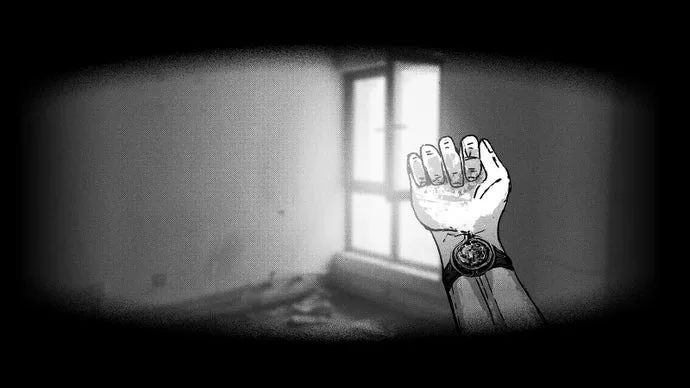
After the critical acclaim of Citizen Sleeper, developer Gareth Damian Martin (Jump Over the Age) is moving toward an even more ambitious and experimental vision. Announced during Summer Game Fest, Signet City is a first-person RPG that trades abstraction for a gritty, black-and-white aesthetic, introducing a concept Martin calls "fungalpunk."
The success of Citizen Sleeper did more than just cement Gareth Damian Martin's reputation as a standout indie developer; it provided a platform for something much more personal and conceptually daring. Speaking on the eve of the sequel's release, Martin expressed a sense of responsibility toward the medium, stating a desire to contribute ideas that push the boundaries of what a role-playing game can be. This ambition has culminated in the announcement of Signet City, a project that seeks to mirror the variety and depth of tabletop RPGs through a lens of industrial decay and biological transformation.
The Birth of Fungalpunk
The origins of Signet City are surprisingly tied to the world of musical theater. While working on the stage production of Sting's *The Last Ship*, Martin conducted extensive research on Newcastle in the 1980s. The imagery of massive, gleaming ships looming over terraced houses sparked a realization: to a child of that era, those industrial giants could just as easily be spaceships. This intersection of 1980s de-industrialization and science fiction became the foundation for a fictional British city, a concept that has been gestating in Martin's mind for nearly a decade.
This setting is defined by a genre Martin describes as "fungalpunk." Moving away from the metallic sheen of cyberpunk or the brass gears of steampunk, fungalpunk focuses on the visceral themes of decay and reinvigoration. The core concept is literal: players act as a fungal parasite inhabiting the minds of human hosts. Martin draws inspiration from the 1989 Japanese film *Tetsuo: The Iron Man*, specifically its depiction of the body's transformation, aiming to explore the biological reality that humans are already composed of vast multitudes of bacteria and fungi.

Post-Punk and Social Decay
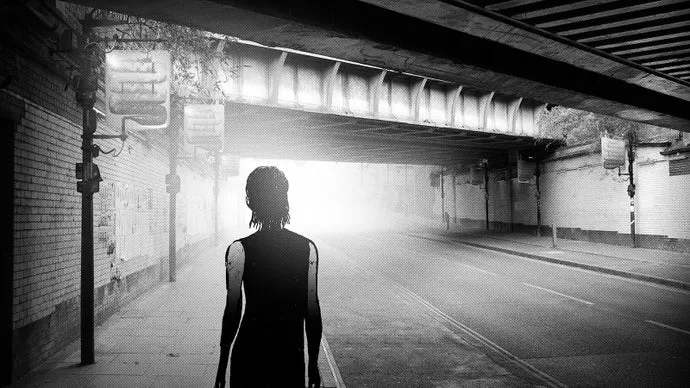
The game's aesthetic is heavily steeped in the post-punk movement of the 1980s. Unlike the more aggressive punk era, Martin views post-punk as a sophisticated engagement with structural politics and transgressive fiction. This is reflected in the game's visual identity—a bleak, high-contrast, and smoggy world that mirrors the nihilism and social shifts of the era. The setting is inspired by the gritty realism of British television like *Our Friends in the North* and *Boys from the Blackstuff*, blending historical social commentary with speculative biology.
While the announcement trailer remains enigmatic regarding specific gameplay mechanics, it offers a glimpse into the player's role. The narrative appears to follow various hosts; for instance, a character named Sid wakes up in a river at the exact moment the player—the parasite—awakens within her mind. Players will select specific areas of the city to inhabit, dropping into the consciousness of individuals to navigate a world caught between industrial collapse and biological evolution.

In Signet City, the player takes control of Sid, a parasite inhabiting the minds of hosts. While the perspective mirrors first-person experiences like Dishonored or Skyrim, the core gameplay relies on the dice-roll mechanics established in Citizen Sleeper. To achieve significant actions in the world, players must roll dice and apply modifiers to their skills.
The gameplay loop revolves around the emotional state of the host. Damian Martin explains that players 'drop into someone's head for the day' to navigate the city. For example, to kick down a door, the player might need to provoke an argument to make the host angry. This emotional escalation provides a mechanical modifier, such as increased physical strength, allowing for specific actions. At the end of the day, these emotions are 'extracted' as a resource to permanently improve the host's skills, though pushing a host toward certain emotions will shape their personality and future even after the player has left them.
The objective for the parasite remains somewhat enigmatic. Rather than a traditional mission, players follow 'bigger offers' received through the sensorium—a sensory experience of voices, tastes, and smells. These leads guide the player toward growth and power, though the ultimate purpose of this expansion is not yet fully revealed.
The autonomy of the host
A key distinction in Signet City is the autonomy of the hosts. They are not mere mannequins but characters with their own motivations and struggles. By inhabiting their minds, players can experience tense scenarios already in progress. This intimacy allows for a deeper connection than traditional NPCs, who often require unnatural dialogue to reveal their lives. Instead, the core relationship is directly between the player and the host.
The game also explores a sensory layer of existence—the bizarre, alien experience of being a parasite within a mind. Martin expresses a desire to make this alien perspective comprehensible to human players through the game's unique atmosphere.
A personal gamble
There is currently no release date for Signet City. The project was announced early to clarify that it is not a direct sequel to Citizen Sleeper and to allow the audience time to digest its unconventional concept. Martin describes the project as their 'biggest swing' yet, admitting to significant nerves regarding whether their personal obsessions will resonate with a wider audience.
Despite the risks of being misunderstood or ignored, Martin is betting on the 'sickos'—those players who enjoy being 'tourists in other people's obsessions.' The developer hopes that the unique, sticky nature of their creative interests will find its niche in the indie RPG landscape.