Samsung Galaxy Tab S12 Ultra Review: Premium Build, Throttling Issues
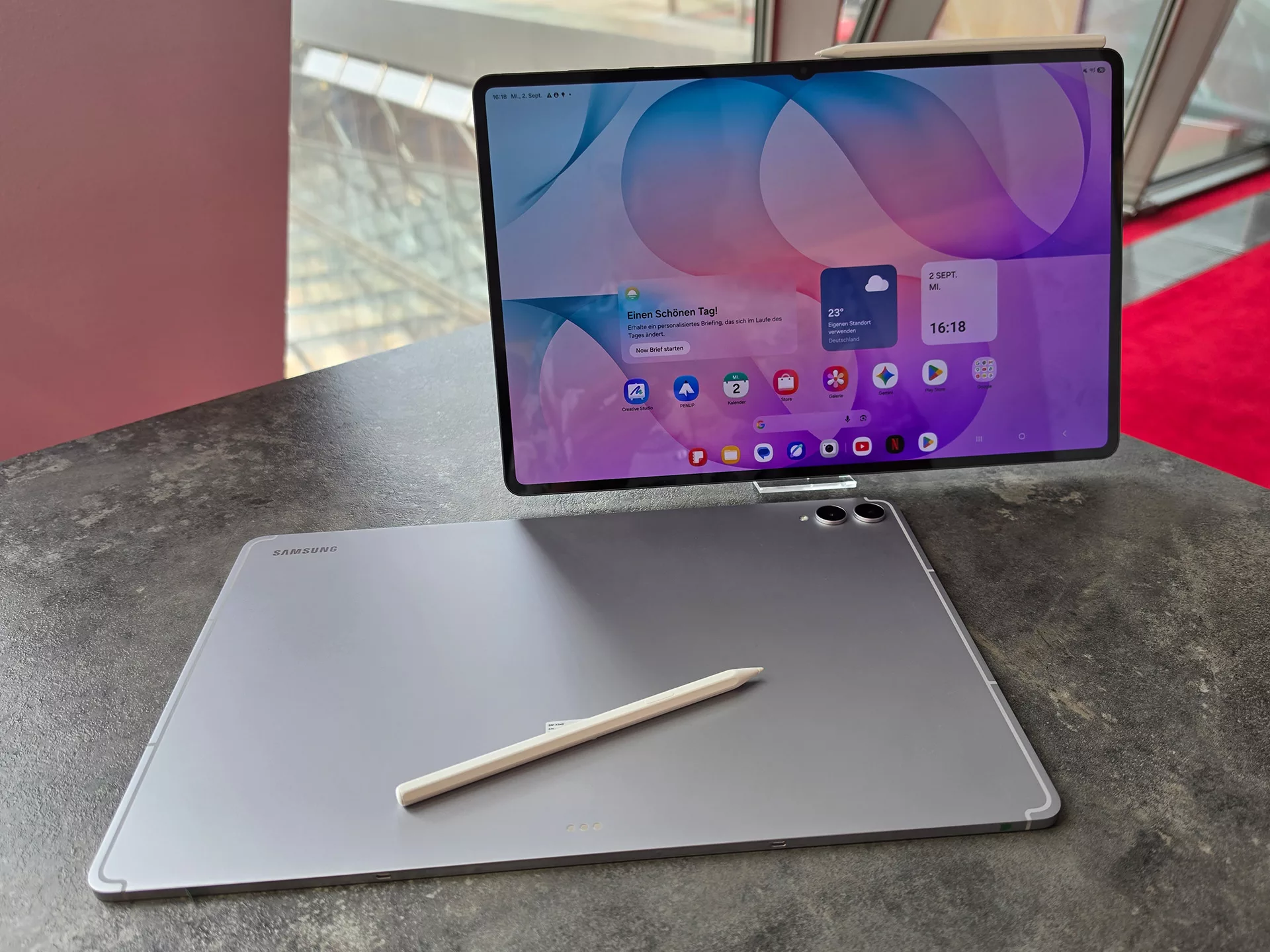
The Samsung Galaxy Tab S12 Ultra arrives as one of the most technically advanced Android tablets on the market, offering a massive, high-quality AMOLED display and a premium, waterproof build. However, despite the high-end promises, the device faces significant challenges in sustained performance. While the hardware feels top-tier, the integration of the MediaTek Dimensity 9500 leads to noticeable thermal throttling and underwhelming graphics performance compared to its predecessor, making it a mixed bag for power users.
Physically, the Galaxy Tab S12 Ultra is a familiar sight. It maintains the same dimensions as the previous generation, weighing in at 692 grams—a weight that, while slightly reduced by three grams, remains substantial due to the massive 14.6-inch screen. Despite its size, the tablet is impeccably built, feels comfortable in the hands, and retains its IP68 rating for dust and water resistance, ensuring durability for mobile use.
Display Excellence and S Pen Features
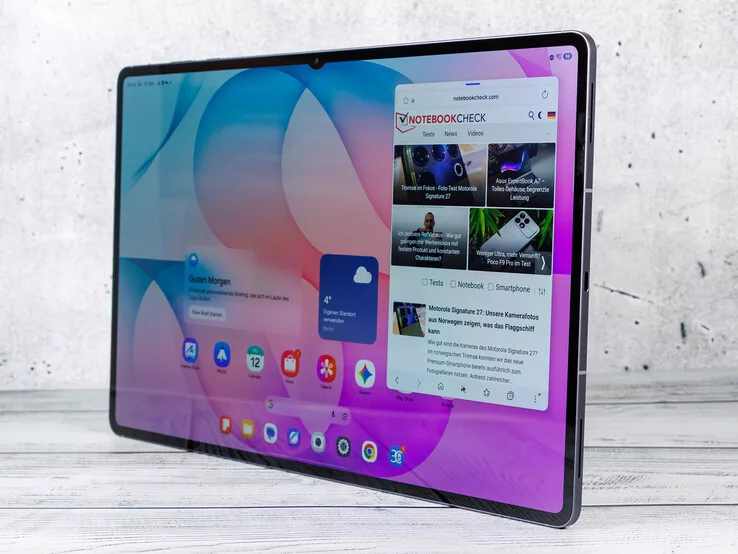
The standout feature remains the 14.6-inch Dynamic AMOLED 2X display. It delivers vivid contrast and high resolution with an adaptive refresh rate of up to 120 Hz. In testing, the screen reached an average maximum brightness of approximately 914 cd/m², with peaks hitting 1,601 cd/m² under reduced white levels and up to 1,747 cd/m² for HDR content. However, users should note that brightness drops to around 730 cd/m² when the ambient light sensor is inactive.
Samsung continues to support the S Pen, which remains a versatile tool for note-taking and creative work, now bolstered by additional AI capabilities. While the stylus is highly functional, it lacks Bluetooth support, and the device's overall feature set—including Wi-Fi 7, Bluetooth 6.0, and USB-C with DeX support—is highly competitive. The inclusion of a microSD card slot is a significant plus for expandable storage, though testing showed it is limited to speeds around 42 MB/s in copy tests.
Performance and Thermal Challenges
Under the hood, the tablet is powered by the MediaTek Dimensity 9500. While this is a high-end SoC, its real-world performance under sustained load is disappointing. The device suffers from significant thermal throttling; in the 3DMark Wild Life Extreme Stress Test, stability dropped to just 30.8 percent, and in the Steel Nomad Light test, it fell to 18.7 percent. This performance drop is accompanied by high surface temperatures, reaching nearly 59 °C in certain areas, which may impact the user experience during intensive tasks.
Connectivity and Networking
The Wi-Fi performance on the Samsung Galaxy Tab S12 Ultra is exceptional. In our testing, the Wi-Fi model demonstrated extremely fast and stable connections, reaching speeds of approximately 3736 Mbps (transmit) and 4188 Mbps (receive) when using a Wi-Fi 7 (802.11be) router. This puts it significantly ahead of competitors like the Huawei MatePad Pro Max and the Apple iPad Pro 13 (2024) in terms of raw throughput in our iperf3 tests.
Cameras: Decent Daylight, Poor Low Light
The camera setup provides usable results in daylight, delivering mostly natural colors and decent dynamic range. However, there are noticeable trade-offs: fine details are only moderately resolved, and the image processing tends to over-sharpen certain areas. The ultra-wide-angle lens suffers from additional loss of sharpness, and the 5x digital zoom produces heavily blurred images.
Low-light performance is a weak point, as image noise and aggressive noise reduction significantly degrade quality. On the bright side, the front-facing camera performs well, offering good dynamic range and natural skin tones, though it does slightly smooth out fine details.
Display: Bright OLED with PWM Concerns
The Galaxy Tab S12 Ultra features a Dynamic AMOLED 2X display that utilizes variable refresh rates. It operates at 120 Hz during standard use and can drop to 30 Hz for 30-fps video playback. While DRM Info indicates modes as low as 24 Hz, the official use of LTPO technology to achieve this has not been confirmed by Samsung.
In terms of brightness, the panel is impressive, reaching a peak of 987 cd/m² and an average of 923.9 cd/m². However, the display uses low-frequency Pulse Width Modulation (PWM) dimming at 240 Hz. This low frequency, combined with an amplitude of 16.05%, may cause eye strain or discomfort for users sensitive to screen flickering.
Display Specifications Comparison
Display Response Times and Gaming Suitability
The display's ability to transition between colors is a critical factor for smooth motion in fast-paced gaming. In our testing, the Samsung Galaxy Tab S12 Ultra demonstrated exceptionally fast response rates. Specifically, the combined rise and fall time for Black to White was measured at 1.44 ms (0.741 ms rise and 0.6975 ms fall). For the 50% Grey to 80% Grey transition, the combined time was 1.52 ms (0.7605 ms rise and 0.7565 ms fall). These results place the device well above the average for tested devices, with only about 8–10% of all tested units showing better response times. This makes the screen highly suitable for high-action 3D titles where minimizing ghosting is essential.
Performance Benchmarks: The Dimensity 9500 Factor
Equipped with the MediaTek Dimensity 9500 and the Mali G1-Ultra MC12 GPU, the Galaxy Tab S12 Ultra shows a performance profile that sits comfortably within the high-end tier, though it faces stiff competition from Apple's M4 and Qualcomm's Snapdragon 8 Elite. In Geekbench 7, the tablet achieved 2840 in Single-Core and 9749 in Multi-Core, performing slightly better than the Lenovo Yoga Tab Plus Gen 2 (Snapdragon 8 Elite) in single-core but trailing slightly in multi-core. In Geekbench 6.7, the device's multi-core score of 10319 is very close to the Dimensity 9500 average (10178), but it remains significantly behind the Apple iPad Pro 13 (2024) with its M4 chip, which leads the class in both single and multi-core tasks.
Graphics and 3D Rendering Performance
When moving to heavy 3D workloads, the Dimensity 9500 shows its capabilities through 3DMark testing. In Wild Life Extreme, the tablet scored 6949, which is nearly identical to the Dimensity 9500 average (6905). However, in the more demanding Wild Life Unlimited, it scored 27233, trailing the average for the chipset (25272) by a small margin. In the Steel Nomad Light benchmarks, the device remains competitive; it scored 2935 in the standard version and 3115 in the Unlimited version, showing consistent performance that stays within the expected range for this high-end silicon, even if it cannot match the peak scores of the iPad Pro's M4 architecture.
- Geekbench 7 Single-Core: 2840 (Dimensity 9500)
- Geekbench 7 Multi-Core: 9749 (Dimensity 9500)
- 3DMark Wild Life Extreme: 6949
- 3DMark Steel Nomad Light: 2935
Graphics and Gaming Performance
In GFXBench testing, the Galaxy Tab S12 Ultra shows a mixed performance profile. In the Aztec Ruins Normal Tier (Onscreen), the device achieved 118 fps, which is roughly 8% lower than the previous Galaxy Tab S11 Ultra (108 fps) and 15% behind the Apple iPad Pro 13 (2024) with its M4 chip. However, in the High Tier (Onscreen) test, the S12 Ultra delivered 86 fps, outperforming the iPad Pro's 60 fps, though it still trails the average Dimensity 9500 performance by 7%. In offscreen tests at 4K resolution, the tablet reached 59 fps, placing it slightly ahead of the Apple iPad Pro 13 (55.1 fps) and very close to the average Dimensity 9500 score (54.9 fps).
The GPU performance in Antutu v12 shows the device's graphics score at 1,258,046 points, which is consistent with the average for the Dimensity 9500 chipset. This places it significantly ahead of the class average for tablets, which stands at 1,286,226 points (noting the class average includes a wide range of devices).
The AI and NPU Paradox
The most striking discrepancy appears in Geekbench AI testing. Despite the marketing around the new Dimensity 9500, the Galaxy Tab S12 Ultra's NPU performance is underwhelming. In Single Precision NPU 1.7 tests, it scored 815 points—a significant drop compared to the Galaxy Tab S11 Ultra's 1,164 points. In Half Precision and Quantized NPU tests, the gap widens further; the S12 Ultra's scores (821 and 1,731 points, respectively) fall far behind the S11 Ultra's massive 9,597 and 13,099 points. In fact, the S12 Ultra's NPU performance is actually lower than the average for the class of tablets in these specific categories.
Thermal Management and Efficiency
The device's thermal profile under maximum load is a point of concern. The upper side of the tablet reached a maximum temperature of 58.8 °C, with an average temperature of 40.9 °C. This is considerably higher than the class average for tablets, which maintains an average of 30 °C. The bottom of the device also heats up, reaching up to 50.6 °C. These temperatures suggest that while the Dimensity 9500 is powerful, the thermal dissipation in the S12 Ultra's chassis may struggle to keep up during sustained heavy workloads.
Storage and Memory Throughput
Regarding data transfer speeds, the Galaxy Tab S12 Ultra demonstrates high sequential read speeds of 3,449.83 MB/s and write speeds of 2,195.34 MB/s. While these figures are solid, they are notably lower than the Huawei MatePad Pro Max in several AndroBench 3-5 metrics, such as random write speeds, where the Huawei outperformed the Samsung by 513%.
Graphics Performance and Thermal Throttling
Despite the high-end positioning, the Galaxy Tab S12 Ultra struggles with sustained graphics performance. In the Wild Life Extreme stress test, the device showed a significant performance drop, with a delta of 37.5% (ranging from 34.3% to 51.6%) compared to its peak. This indicates notable thermal throttling when the GPU is under heavy load. In comparison, the Apple iPad Pro 13 (2024) with the M4 chip demonstrated a slightly lower delta of 37.5% in the same test, while the Huawei MatePad Pro Max showed a more stable 16.7% drop. Interestingly, the previous generation, the Samsung Galaxy Tab S11 Ultra, performed better in the Wild Life Extreme test with a 32% delta.
Stability tests further highlight the device's thermal management challenges. In the Wild Life Stress Test, the tablet maintained a high stability level of 97.2%, but in the more demanding Steel Nomad Light stress test, the performance delta increased to 18.7% (17.6% to 23.1%). This suggests that while the device can handle short bursts of activity, prolonged intensive gaming or rendering tasks will lead to performance degradation to manage heat.
Audio and Multimedia Experience
The audio system is a standout feature, earning a perfect 100% score in the review's metrics. The speakers are relatively loud, reaching 87.8 dB. While the bass is slightly reduced—averaging 9.4% lower than the median—the overall sound profile is remarkably linear, with mids and highs staying within 2% to 4.4% of the median. However, when compared to the entire class of tested devices, the audio performance is actually in the bottom 3%, with 97% of devices in this category performing better.
Battery Life and Power Consumption
Equipped with a 11,600 mAh battery, the Galaxy Tab S12 Ultra provides solid endurance, delivering approximately 13 hours of WiFi web surfing. In terms of power efficiency, the device's idle power consumption (averaging 7.2W) is higher than many competitors, such as the Apple iPad Pro 13 (5.02W) or the Lenovo Yoga Tab Plus Gen 2 (1.7W). Under load, the tablet consumes an average of 9.28W, which is slightly below the class average of 9.03W but remains a significant factor for long-term battery management.
Technical Specifications and Pricing
- Processor: MediaTek Dimensity 9500
- GPU: Arm Mali G1-Ultra MC12
- Memory/Storage: 12 GB RAM, 256 GB UFS 4.0 Flash
- Display: 14.60" Dynamic AMOLED 2X (2960x1848, 239 PPI)
- Weight: 692 g
- Price: Starting at 1539€
The Samsung Galaxy Tab S12 Ultra arrives with a heavy weight of expectations. Following a series of leaks and high-profile announcements that promised a leap in mobile computing, the actual experience of using this flagship tablet is a mixture of hardware excellence and software-driven frustration. While the device feels like a premium piece of technology in the hand, the actual performance metrics suggest that the gap between marketing promises and real-world execution remains significant.
The Performance Gap
On paper, the Galaxy Tab S12 Ultra should be a powerhouse. However, testing reveals that the device struggles to maintain its peak performance levels during sustained workloads. While it can hit high numbers in short-burst benchmarks, thermal management issues appear to trigger aggressive throttling. This means that for users expecting a seamless, high-performance workstation experience—especially when multitasking or running demanding applications—the reality is a noticeable dip in responsiveness and frame rates.
This performance inconsistency is particularly disappointing given the device's positioning. It is marketed as a top-tier tool for professionals and power users, yet the actual throughput often falls short of what the theoretical specifications would suggest. The discrepancy between the high-end silicon and the actual sustained performance suggests that Samsung's optimization for this specific chassis and thermal profile has not yet reached the level required to justify its premium status.
Hardware vs. Reality
The build quality and display technology remain the highlights of the S12 Ultra. The screen is exceptional, providing the visual fidelity expected from a flagship Samsung product. However, a beautiful display cannot fully compensate for a processor that loses its edge when the device gets warm. The hardware is undeniably premium, but the software and thermal implementation prevent it from being the undisputed performance king it was intended to be.
In summary, the Galaxy Tab S12 Ultra is a device of contradictions. It offers the aesthetics and the display of a future-proof powerhouse, but the actual performance delivery is a letdown for those who prioritize raw speed and sustained stability over visual splendor.