
RTX 5090 prices rise 41% in Korea since January, Danawa warns RTX 50 prices may climb further
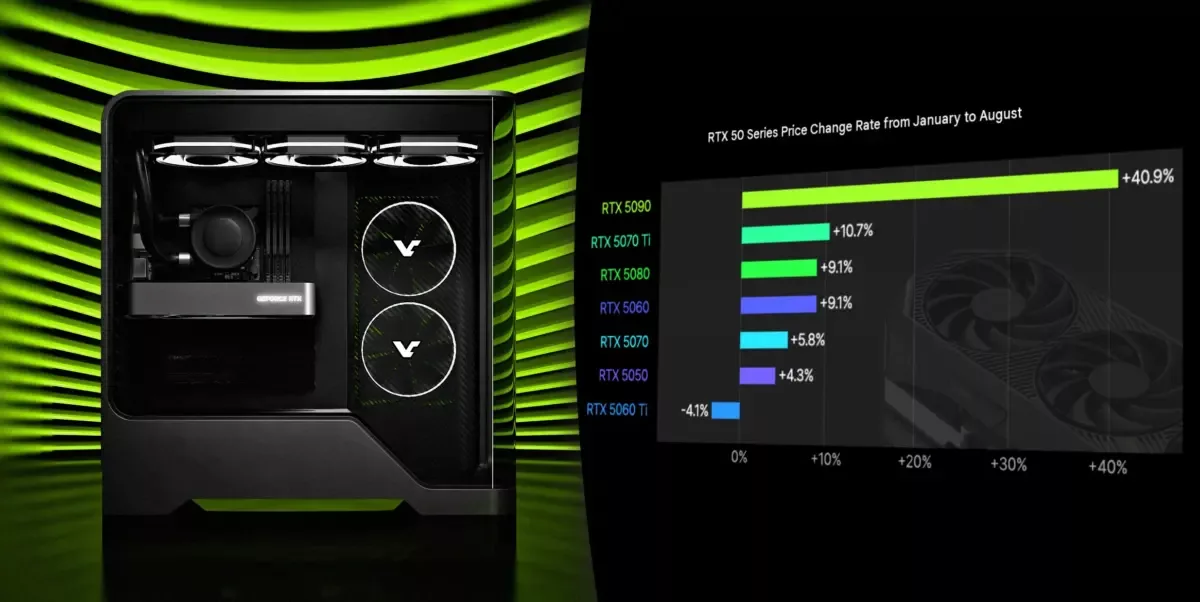
South Korean sales data from Danawa reveals a significant price hike for NVIDIA GeForce RTX 50 graphics cards. The flagship RTX 5090 saw its price jump by 40.9% between January and August of this year, marking the steepest increase across the entire Blackwell lineup.
While the top-tier card leads the surge, other models also finished the period at higher prices: the RTX 5070 Ti increased by 10.7%, while the RTX 5080, RTX 5060, RTX 5070, and RTX 5050 rose by 9.1%, 5.8%, and 4.3% respectively. The only exception was the RTX 5060 Ti, which ended 4.1% below its January level, though analysts note this figure likely aggregates both 8GB and 16GB variants, with the lower-capacity model driving the apparent discount.
Pricing trends and market drivers
Danawa’s monthly trend charts indicate that RTX 5090 pricing accelerated around June and remained elevated through July and August. In contrast, the RTX 5080 and RTX 5070 Ti showed less volatility but still closed August above their January benchmarks.
The mainstream segment followed a different pattern: RTX 5070 prices peaked early in the year before declining and later recovering, while the RTX 5060 Ti dropped after the first few months and has yet to return to its January level. The RTX 5060 and RTX 5050 remained comparatively stable but were still higher in August than at the start of the year.
Warning: Another price increase on the horizon?
Danawa cites industry expectations that RTX 50 series graphics card prices could increase by up to another 30% starting this month. The pressure is attributed to:
- Higher costs for TSMC advanced-process wafers used in Blackwell chips;
- Rising prices for GDDR7 memory, which powers the high-end models;
- Manufacturers adjusting shipments or considering direct price hikes.
Analysts warn that higher-end models may see larger increases. Meanwhile, NVIDIA has not announced new official pricing for the GeForce RTX 50 series and has remained silent on recent market fluctuations, while continuing to promote its in-house AI models.
Гика
