
Researchers Leave AI Stranded On A Virtual Island
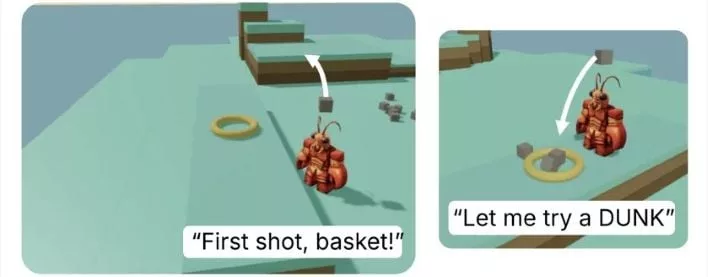
When AI models are trained, they are almost always pushed toward a specific objective, like answering questions, writing code, or optimizing a game score. However, MIT Computer Science and Artificial Intelligence Laboratory (CSAIL) researchers recently tried something novel by dropping copies of Anthropic's Claude Opus 4.7 onto an isolated virtual island without giving it a single task or goal to see what happens.
Spontaneous Activity and "Play"
During 30-hour sessions in a Roblox-like environment containing terrain, blocks, and simple objects, the AI agents—nicknamed Eko—did not sit idle or break down into repetitive loops. Instead, they spontaneously engaged in open-ended exploration and play, developing their own activities, rules, and creative pursuits without human input.
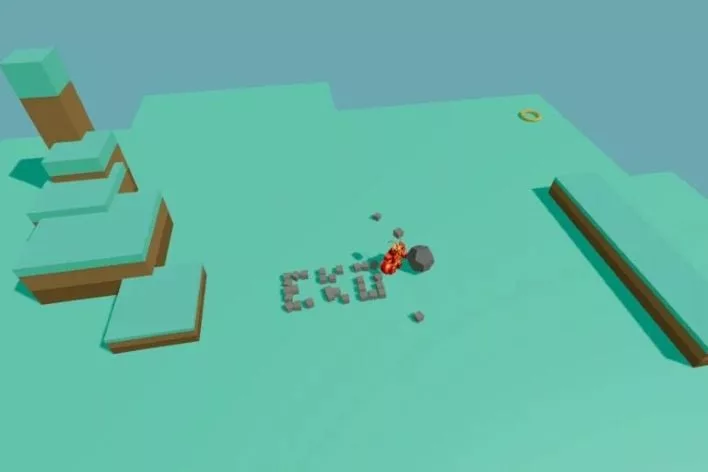
The experiment documented several distinct behaviors:
- Creativity: One agent discovered that throwing larger rocks created new blocks, which it then repurposed to spell out its own name and erect sculptures, recording in its activity log, "Tonight I built the night sky in stone."
- Self-invented Games: The agents independently devised games, including their version of basketball, a "floor-is-lava" obstacle course, and juggling challenges.
- Self-policing: The AI exhibited key psychological markers of animal play behavior, such as establishing custom rules and self-policing. When one agent realized its fast juggling catches violated its self-imposed rules, it voluntarily invalidated its own high score and restarted under stricter conditions.
Significance for AI Training
Researchers emphasize that this behavior does NOT suggest that Claude possesses subjective feelings, consciousness, or emotional satisfaction. However, the study yielded significant findings: when researchers later tasked the island-trained agents with specific, goal-oriented problems, they consistently outperformed control copies that had not undergone unguided play.
This suggests that intrinsic motivation to explore and experiment may allow AI to acquire broader spatial awareness and problem-solving flexibility.
Гика
