
Onsemi halts $2 billion SiC expansion in Czechia due to market shifts
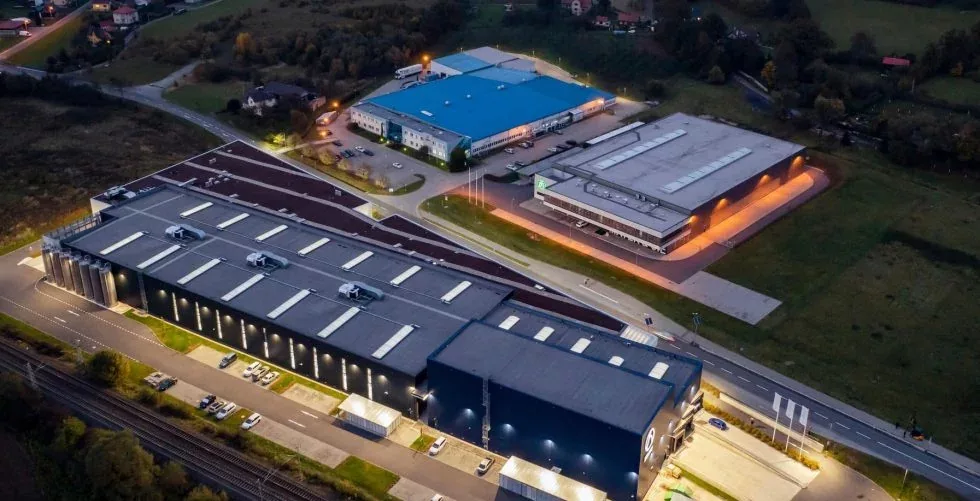
Europe's ambition to bolster its semiconductor sovereignty and reduce reliance on international supply chains has hit a significant reality check. On November 6, 2026, the American semiconductor manufacturer Onsemi, in coordination with the Czech Ministry of Industry and Trade, announced the cancellation of its planned expansion of Silicon Carbide (SiC) manufacturing in Rožnov pod Radhoštěm. The project, originally unveiled in June 2024, was intended to represent an investment of up to $2 billion, aiming to establish a highly integrated production chain for SiC power semiconductors.
The decision marks a pivot from the optimistic projections seen during the peak of the electric vehicle (EV) market surge. While many manufacturers anticipated sustained, exponential growth in demand for SiC components, actual market development has been more uneven across different regions and applications. As multiple competitors announced or began constructing their own production capacities, the economic risk for new, massive-scale facilities increased significantly. Modern semiconductor fabs require enormous upfront capital and must maintain high utilization rates to remain profitable; a slowdown in demand or a drop in market prices could jeopardize the viability of such large-scale investments.
Existing operations to remain intact
It is crucial to distinguish between the cancelled expansion and Onsemi's current footprint in the region. The company explicitly stated that its existing Silicon and Silicon Carbide manufacturing facilities in Rožnov pod Radhoštěm will continue to operate without changes. Furthermore, the development site in Brno will remain active. Onsemi has committed to continued investment in both locations and plans to hire additional staff, though specific figures for these ongoing investments were not disclosed.
The strategic importance of Silicon Carbide
Silicon Carbide is a key material in the wide-bandgap semiconductor category. Compared to traditional silicon, SiC possesses a larger bandgap, allowing for components with a higher electric breakdown field strength. This enables the production of more efficient power switches, particularly beneficial for high-voltage and high-frequency applications. Typical use cases include inverters for electric vehicles, fast-charging stations, industrial power supplies, and renewable energy systems. Additionally, efficient power electronics are becoming increasingly relevant for AI data centers, where massive amounts of power must be distributed with minimal loss.
However, rising demand in data centers does not automatically guarantee full capacity utilization for every planned SiC fab. Profitability remains heavily dependent on specific application trends, competition from alternative semiconductor technologies, and the inherently higher manufacturing costs associated with SiC production.
Industrial policy and the European context
The project carried significant weight beyond Onsemi's corporate strategy. In November 2025, the European Commission approved state aid amounting to €450 million to support the planned expansion, viewing the facility as a cornerstone of the European strategy to strengthen domestic semiconductor capacities. While the cancellation of the expansion removes the basis for this specific project, it remains unclear whether the full amount of the approved subsidies had already been disbursed. No official information has been released regarding potential financial or legal consequences resulting from the project's termination.
This case highlights a fundamental challenge for industrial policy: while state subsidies can mitigate high initial investment costs, they cannot substitute for sustained market demand. For specialized semiconductor technologies, new production capacities must align precisely with actual customer requirements to avoid the risk of creating economically unsustainable facilities.
The semiconductor industry is seeing a significant shift in investment priorities as Onsemi has officially decided to halt its massive expansion project in the Czech Republic. This decision effectively cancels a planned investment that was estimated to reach up to $2 billion, aimed at boosting the production of silicon carbide (SiC) components.
Strategic pivot in SiC production
Silicon carbide has become a critical material for power electronics, particularly in the automotive and renewable energy sectors due to its superior efficiency and thermal properties compared to traditional silicon. While the expansion in Czechia was intended to secure a larger share of this growing market, the cancellation marks a notable retreat from the previously announced large-scale infrastructure development in the region.
The scale of the cancelled project—potentially totaling $2 billion—highlights the high stakes and significant capital risks involved in building specialized SiC fabrication facilities. While the specific reasons for the sudden halt have not been detailed in a public statement, the move suggests a strategic recalibration of Onsemi's global manufacturing footprint and capital allocation in the face of evolving market demands.
Гика
