

NVIDIA RTX Spark N1X: ARM SoC with Blackwell GPU and 128 GB Unified Memory
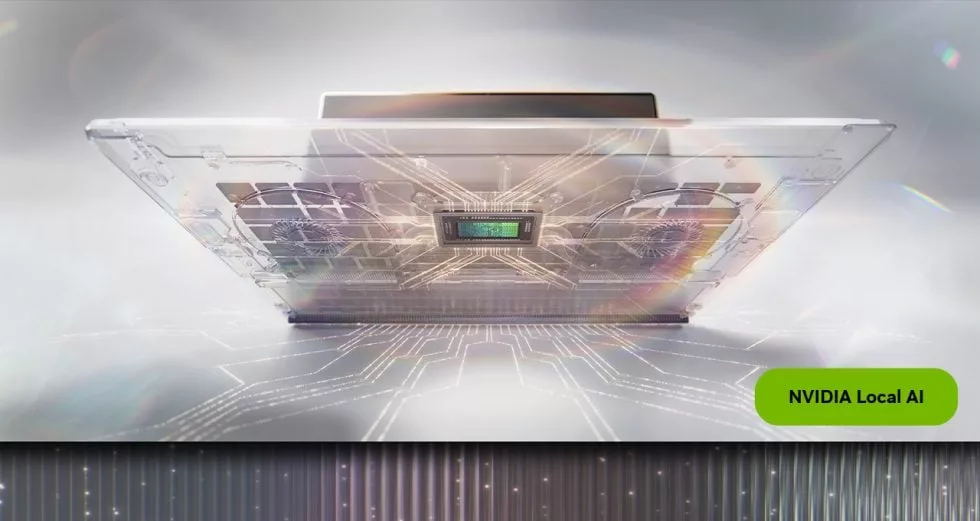
NVIDIA has confirmed that its new RTX Spark platform will launch in October, bringing the company's Grace-Blackwell architecture to a broader range of compact Windows PCs and laptops. At the heart of the system is the "N1X" System-on-Chip, which combines ARM-based CPU cores, an integrated Blackwell GPU, and up to 128 GB of shared memory in a single package. The platform is primarily aimed at developers, content creators, and users who want to run large AI models locally, while also providing enough graphics performance for gaming, 3D applications, and video editing.
NVIDIA plans to offer the N1X in at least two configurations. The more powerful variant pairs a Grace CPU with 20 ARM cores and a Blackwell GPU with 6,144 CUDA cores. Depending on the specific device, manufacturers can equip these systems with anywhere from 24 to 128 GB of shared memory. This configuration is intended for both laptops and compact desktop systems. The smaller variant features 18 CPU cores and 5,120 CUDA cores, with memory options ranging from 24 to 32 GB. Based on currently available information, this configuration is planned exclusively for laptops.
Unlike traditional gaming PCs where the processor and graphics unit have completely separate memory, the N1X relies on a shared LPDDR5X memory pool. Both the CPU and GPU access this common memory area, meaning large datasets do not need to be constantly transferred between standard system RAM and a separate graphics memory. This approach can offer advantages for local language models, image generators, video models, and complex 3D projects. A configuration with 128 GB could provide the GPU with a significantly larger memory area than is currently possible with standard GeForce graphics cards. However, this does not automatically mean the entire memory can be used as classic VRAM at all times, as the operating system, applications, and background processes also require a portion of it.
NVIDIA positions RTX Spark not just as a gaming platform, but primarily as a foundation for local AI agents. The company stated that it will support its existing ecosystem, including CUDA, TensorRT, RTX acceleration, and adapted AI tools. Alongside the new hardware, NVIDIA announced optimizations for llama.cpp and vLLM. According to the company, these optimizations should accelerate local inference by up to a factor of 1.9, depending on the model and configuration. These improvements will be available through tools like LM Studio and Ollama. Additionally, NVIDIA PAIR will be introduced as a tool that can distribute AI tasks across multiple computers within a local network. Rather than pooling the memory of multiple GPUs into a single large storage pool, PAIR acts as an intelligent distributor that routes individual tasks to currently available systems.
Among the first announced devices are the Lenovo Yoga 9n as a convertible laptop and a compact RTX Spark desktop from Acer. Additional systems are expected from ASUS, Dell, HP, MSI, and Microsoft. It is not yet fully clear which models will actually appear directly in October. Beyond AI performance, NVIDIA highlights the capabilities of the Blackwell graphics architecture, which fundamentally supports ray tracing, DLSS, and hardware-accelerated video processing. According to NVIDIA, manufacturers and game developers such as Electronic Arts, Embark, and Ubisoft are already working on support for the platform. Because the N1X is based on the ARM architecture, its everyday usability also depends on software support under Windows. Applications without a native ARM version can be run through translation layers, but they may not always achieve the same performance and compatibility as native programs.
RTX Spark could become an interesting alternative to systems with separate CPUs and graphics cards for compact AI workstations. The combination of a Blackwell GPU, CUDA support, and up to 128 GB of shared memory distinguishes the platform from standard laptop processors. For gamers, however, several questions remain open. The actual power consumption, memory bandwidth, driver quality, and compatibility with older x86 games will be decisive. Prices for the first devices have also not yet been widely announced. Nevertheless, the technical prerequisites for powerful ARM-based Windows PCs are in place.
Гика
