
NVIDIA makes DLSS 5 twice as fast: smaller model and lower VRAM usage
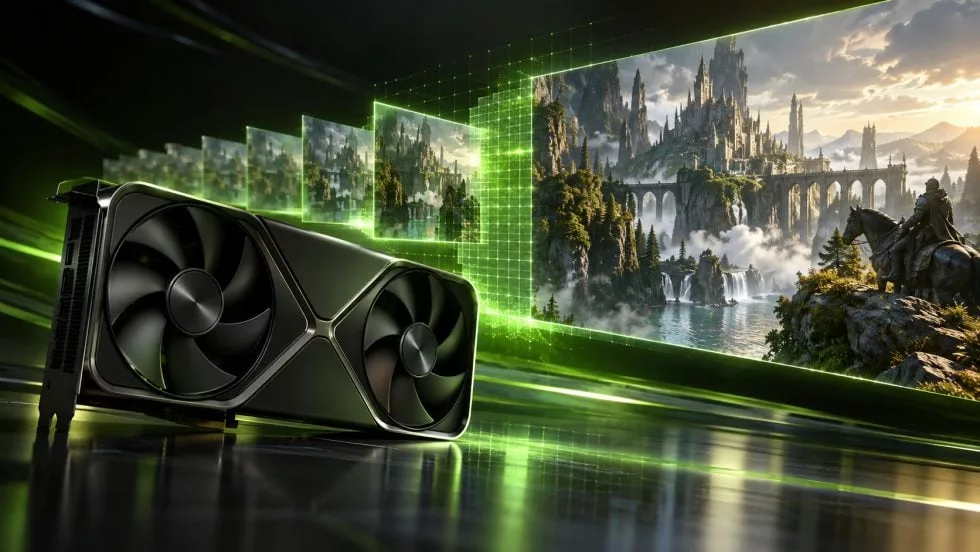
NVIDIA has significantly overhauled its 3D-Guided Neural Rendering model, known as DLSS 5. The October update reportedly doubles the execution speed compared to the September version, while simultaneously shrinking the model size by 24%. This shift focuses on efficiency—reducing parameters and memory footprint without sacrificing visual fidelity.
Efficiency over marketing gimmicks
Rather than introducing new visual bells and whistles, NVIDIA has prioritized architectural optimization. The updated model now consists of approximately 118 million parameters. A 24% reduction in model size is a significant technical achievement: fewer parameters lead to reduced memory transfers and faster inference times. In the realm of neural rendering, where every millisecond counts, this efficiency is paramount.
Memory management also sees a major improvement. At 4K resolution, DLSS 5 now requires roughly 20% less VRAM. This is a practical benefit for modern gaming, as neural rendering must compete with textures, ray tracing data, and geometry for limited video memory. By reducing the footprint of the upscaling path, more VRAM is available for the actual game assets, which is particularly beneficial for hardware with limited memory capacity.
Performance and hardware requirements
NVIDIA reports that the GPU overhead—the processing power required to run the DLSS technology itself—has been nearly halved compared to the September version. This reduction allows for a higher net performance gain in games. For instance, in NBA 2K27, NVIDIA claims a performance increase of up to 1.4× compared to the previous DLSS 5 iteration. However, this figure is a maximum value achieved under specific testing conditions and depends heavily on the GPU and game settings.
The update also highlights a clear distinction between hardware generations:
- The 3D-Guided Neural Rendering feature remains exclusive to GeForce RTX 50 series and RTX-Spark systems.
- Owners of RTX 40-series cards will benefit from a parallel update to the Frame Generation path, which introduces a new performance mode called Preset C.
Additionally, developers are gaining more control over the technology's behavior. Following discussions regarding how early versions of DLSS 5 could sometimes alter the appearance of characters and scenes (as seen in Hogwarts Legacy), developers are being given more tools to manage how aggressively neural rendering is applied, aiming for more predictable visual results.
Гика
