
Moonlighter 2 Review: A Refined Number-Go-Up

Moonlighter 2: The Endless Vault refines the beloved dungeon-crawling shopkeeper formula by transforming every core mechanic into a more satisfying loop of risk, reward, and optimization. Developed by Digital Sun and published by 11 Bit Studios, the game launches on Windows via Steam on September 2, 2026, priced at $30, £25, or €30. It is a thoughtful evolution that prioritizes player agency and numerical satisfaction over punishing difficulty, making it a standout entry in the genre.
The Moonlighter series casts you as Will, a hybrid dungeoneer-merchant who delves into randomly shifting combat arenas by night and sells unearthed treasures by day. In the dungeons, you fight monsters and collect relics to fit in your bag. In the shop, you determine the best price for these items and spend the proceeds on upgrades that improve your dungeon runs. Throughout this cycle, the focus remains on multipliers, which drive the game’s core satisfaction.
Combat in Moonlighter 2 begins with a choice between four weapons, each featuring a standard attack and a special ability. You also always have a gun and your trusty backpack, which can be used to whack stunned enemies out of the level. These elements combine into excellent choreography, especially as you develop your build further into the dungeon. For instance, you might unlock a perk that deals extra damage after shooting an enemy, or one that heals you when you knock an enemy off the level with your backpack. Another perk might add fire damage to your basic attack. No two combat dances are quite the same, but the core remains familiar, with extra damage acting as a perk rather than a necessity.
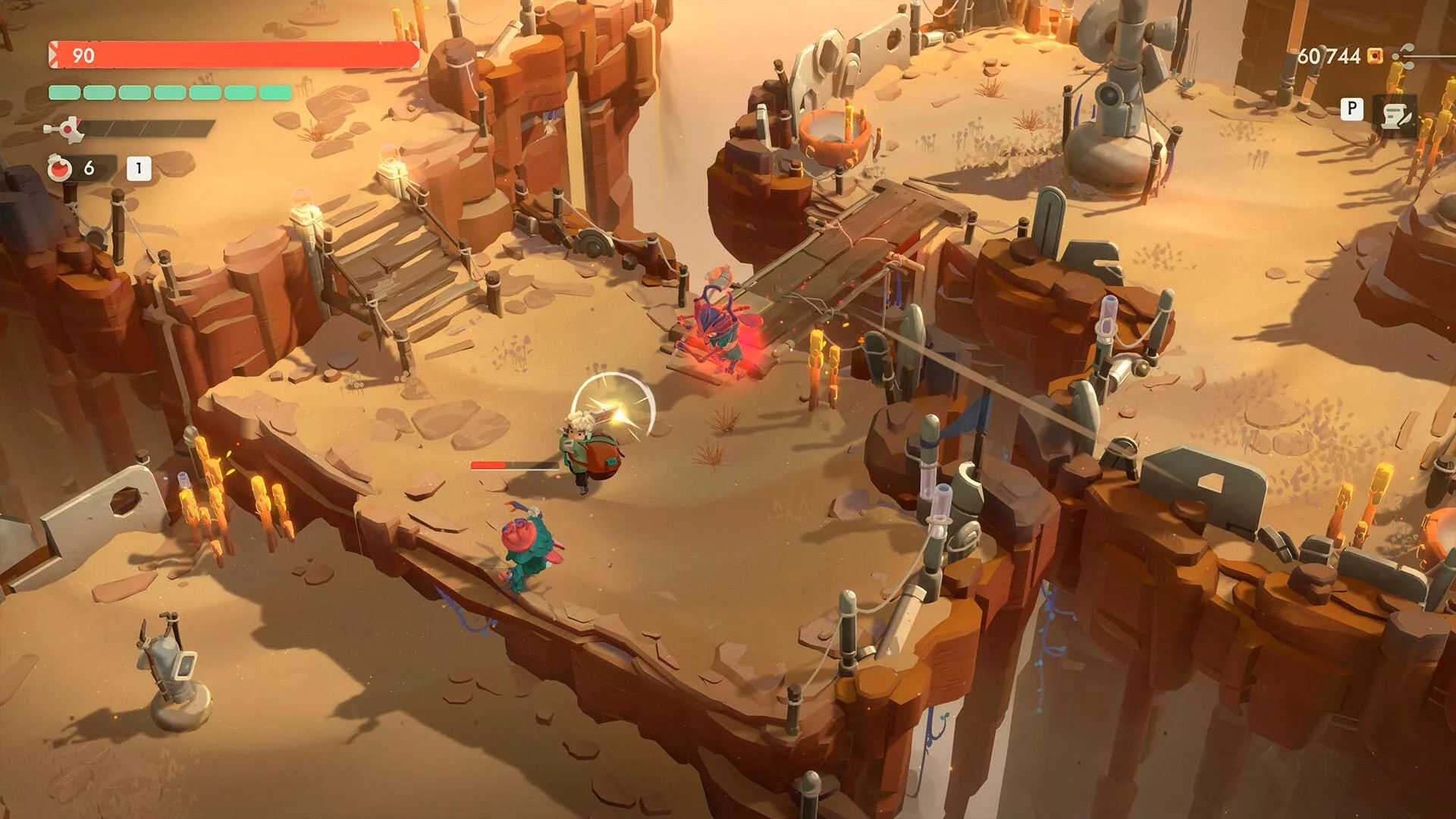
The combat is not especially difficult, and death, though rare, is not punishing. Will has a pendant he can use to escape danger, but if you mistime it and die, your treasures simply lose half of their quality. This is where the real multiplicative tricks begin. Many items have rules that activate when placed in your bag. An item might double the value of the treasure in the slot to its left, or conversely, it may destroy it. Figuring out where to slot an item to maximize the value of your combined loot is key. In each of the three themed dungeons (six if you include variants), items placed in your bag may have additional specific effects on other items. In the museum, for example, electrocuting and repairing treasures adds to their quality, and other items may provide cascading effects, such as adding to the quality of everything in the bag when adjacent to a shocked item. Placement and timing become extremely important, building a puzzly breather into every few dungeon chambers.
Once you escape with these varying-quality treasures, the multiplication becomes even more complicated. Will must figure out the price people will pay for an item in his store, but they can be persuaded to pay much more than its base value depending on what furniture is present in the shop, what perks you’ve unlocked using your robotic chest, and what mascot you’ve decided to pet that day. It is extremely satisfying to spend an entire dungeon run pumping up the quality of an item and then place it perfectly to make tens of thousands of gold pieces.
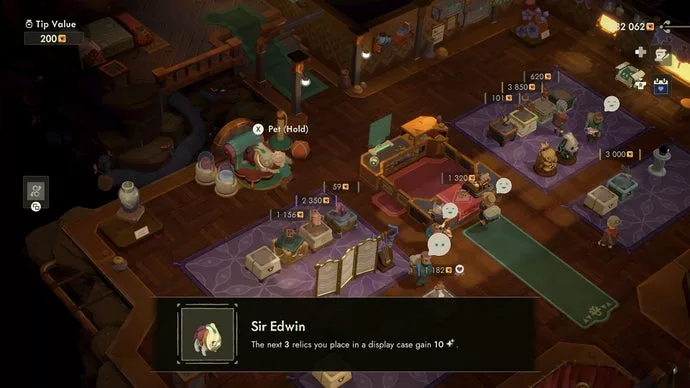
You will need every one of those gold pieces, because Will is fighting to buy his home back. The events of the first Moonlighter are recapped briefly at the beginning of the game, and the entire story of Moonlighter 2 is light-touch, but there is enough there to provide a decent scaffold of meaning to what would otherwise be a straightforward bit of number going up. The overarching quest of making a whole bunch of cash helps to keep the game ticking along at a steady rhythm and spaces out upgrades to the various shops around the village. These shops exist in a symbiotic relationship with you, providing potions and weapon upgrades. As you need to make more and more money, you can pour it into them, and they’ll help you make even more money.
The narrative does not outstay its welcome. It suggests it is going to be about 25% longer than it actually is, and as you reach that marker, you might begin to worry that the game will grind. But then it makes a sidestep and concludes neatly right where it ought to. The reviewer finished the game in just under 30 hours. This does make the pacing a little odd, but with the story itself being secondary to the experience of seeing huge numbers, it does not really affect the experience too much. There are plenty of sidequests, secondary challenges, and endless modes if you are clamoring for more.
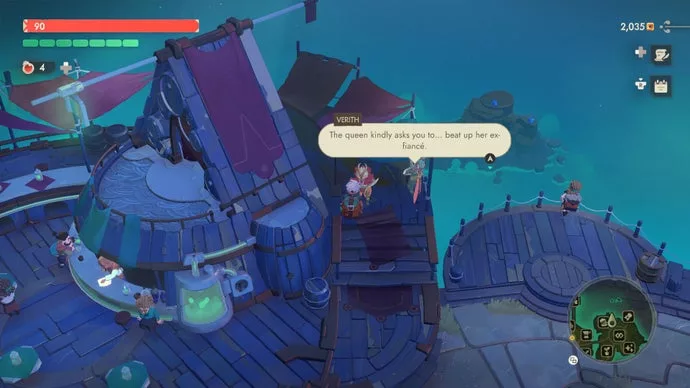
Everything detailed here is perfectly pleasant and easy to recommend. However, the most surprising aspect of Moonlighter 2 is that every single thing mentioned is a detail that blows the original game out of the water. They are either new additions or something that has been significantly improved. This goes for tiny but intensely important quality-of-life changes, such as seeing the base sale price of an item without having to press any additional buttons, all the way up to the overall structure of the game. Having the challenge be making huge amounts of money rather than beating all the dungeons means it can be much more relaxed and enjoyable. Every single one of these improvements acts as a multiplier that turns something that could have been decent into something much more remarkable.
Moonlighter 2: The Endless Vault is available on Windows via Steam. It is also listed for Nintendo Switch 2, PS5, and Xbox Series X/S, though the review was conducted on Windows. The game is priced at $30, £25, or €30. It was reviewed on a system with an AMD Ryzen 9 7950X, 32GB RAM, Nvidia RTX 4070 Ti SUPER, and Windows 10.
Флешка
