

Microsoft Surface Laptop 13 (2026) Review: A Near-Silent MacBook Air Rival with Snapdragon X2 Plus
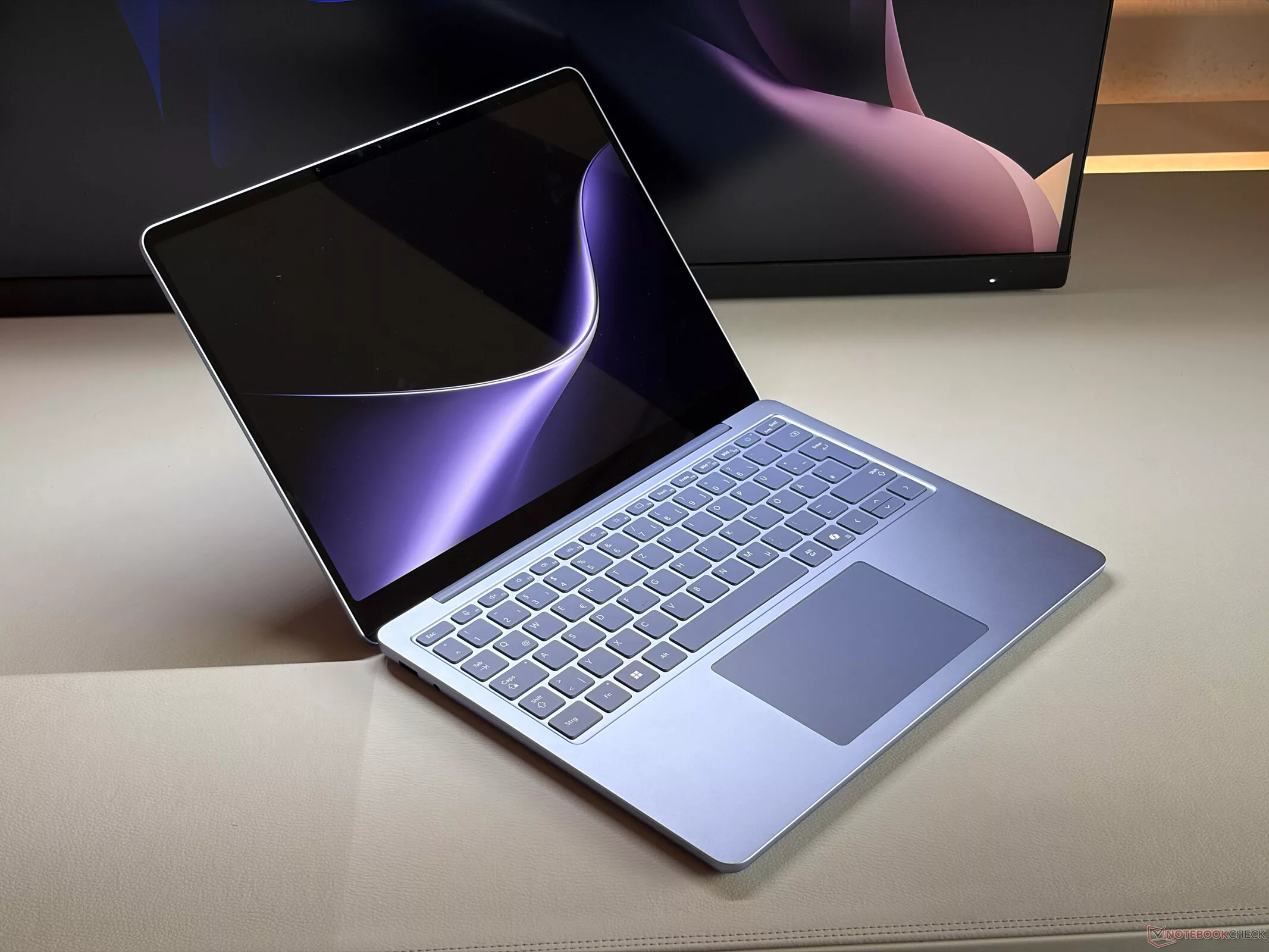
The new Microsoft Surface Laptop 13 (2026) is a refined everyday ultrabook that positions itself as perhaps the closest Windows alternative to the MacBook Air. The core upgrade isn't in the aesthetics, but in the internals: the transition to the efficient Snapdragon X2 Plus SoC makes this device almost silent while maintaining premium build quality and exceptional battery life.
Efficiency and Silence: The Major Upgrade
The most significant improvement lies in the thermal management. Thanks to the new Qualcomm Snapdragon X2 Plus (6 cores, Oryon Gen 3 Prime architecture), the laptop operates incredibly quietly. During most everyday tasks and even during many heavy benchmarks, the fan remains virtually inaudible. Even under maximum stress, noise levels only reached 29 dB(A), making it one of the quietest Windows laptops currently available.
Power efficiency has also seen a major boost. In our Wi-Fi web surfing test at 150 nits, the device lasted an impressive 18 hours and 50 minutes. Even at maximum brightness, the runtime exceeds 10.5 hours, ensuring it remains a reliable companion for mobile professionals.
Display and Performance: The Trade-offs
The display received a much-needed brightness boost, now exceeding 500 nits, which significantly improves outdoor usability compared to previous generations. However, there is a notable technical drawback: the 1920 x 1280 IPS panel is still limited to a 60 Hz refresh rate. In an era where competitors and even the updated Surface Pro line are moving toward 90 Hz or 120 Hz, this feels like a missed opportunity.
Performance-wise, the Snapdragon X2 Plus delivers solid results for general productivity. It is only about 11% slower than the more powerful Snapdragon X2 Elite found in the larger Surface Laptop 13.8. While the Adreno X2-45 GPU is 20–40% faster than its predecessor, it remains insufficient for serious gaming; in demanding titles like Cyberpunk 2077, performance hovers around 11–12 FPS on low settings.
Build and Connectivity
The metal chassis maintains the premium build quality expected from the Surface lineup. The keyboard and clickpad provide a comfortable typing experience, and Wi-Fi 7 support ensures stable, high-speed connectivity. However, potential buyers should keep several limitations in mind:
- The "LPDDR5x" RAM is soldered to the motherboard, preventing any future upgrades.
- Internal access is cumbersome; replacing the "M.2-2242" SSD requires removing the top base unit and disconnecting delicate cables.
- Port selection is somewhat limited, featuring two USB-C ports (lacking USB 4.0 support) and one USB-A port, with no additional USB-C port on the left side for convenient charging.
Microsoft has also discontinued the 8 GB RAM model, making 16 GB the new baseline. This has pushed the starting price to $1199 for the 256 GB storage SKU.
Гика
