

Microsoft optimizes Windows 11 for 8GB RAM systems
Microsoft has announced a series of Windows 11 optimizations specifically targeting computers with limited memory, such as those with 8GB of RAM. According to the company, recent updates improve system responsiveness and multitasking performance by leveraging smarter resource allocation and memory management.
The updates focus on making Windows 11 more efficient on machines with 8GB of RAM. Microsoft claims that internal testing shows multitasking performance has increased by up to 40%, while overall system responsiveness has improved by up to 20%. These optimizations cover memory compression, background processes, application loading, and resource allocation, aiming to allow 8GB systems to handle more simultaneous tasks without immediate hardware upgrades.
Smarter Memory and Priority Management
A key technical change involves how Windows handles memory compression and paging. Microsoft has adjusted the timing for when data is compressed, moved to storage, or restored to system memory. The company claims Windows can now retain up to 2GB more active data in RAM instead of transferring it to slower storage. This is intended to reduce the frequency of applications and browser tabs needing to reload when users switch between tasks.
The company has also adjusted foreground operation priorities. Opening interface elements like the Start menu, Settings, and File Explorer is now up to 20% faster compared to January 2026 builds. Meanwhile, background activities, such as search indexing, receive lower priority during active user interaction. Additionally, Microsoft Edge can launch up to 33% faster by connecting directly to an existing background process.
Resource Savings and Test Results
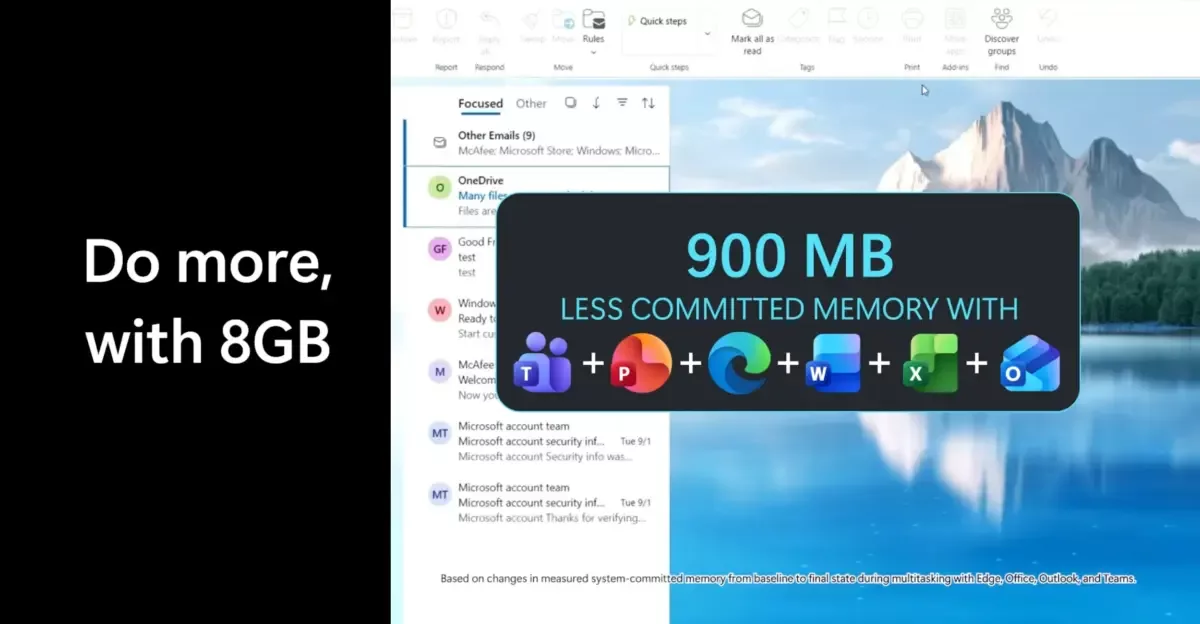
Microsoft reports that optimizations across Windows, Edge, and Microsoft 365 applications reduce committed-memory growth by up to 900MB during multitasking tests. Approximately 360MB of these savings come from Word, Excel, PowerPoint, and Outlook. Windows Widgets now only loads on systems with 8GB of RAM or less, reducing memory commitment by about 200MB when inactive. Furthermore, Microsoft Edge now puts inactive tabs to sleep after 15 minutes by default, down from the previous two-hour limit.
To demonstrate these gains, Microsoft tested an HP OmniBook 3 laptop equipped with 8GB of RAM and a Snapdragon X Plus 8-Core processor. In a workload involving 20 Edge tabs, 4K video playback, and large Office documents, the updated Windows build completed tasks up to 40% faster than the January 2026 version. Microsoft notes that these results are specific to this tested configuration and workload rather than a universal benchmark.
Availability and Future Plans
The improvements are available in Windows 11 version 26H2, build 26300.9818 or later. While most updates are delivered via Windows Update, some benefits require the latest versions of Edge, Microsoft 365, and Teams. Microsoft plans further optimizations, including shared web engines for Search and Widgets, as well as improvements for OneDrive and Photos. However, the company maintains that these updates are not a substitute for more RAM, continuing to recommend 16GB or more for demanding workloads.
Гика
