

Microsoft Expands AutoSR: Handheld Mode, 1080p, and Auto HDR Support
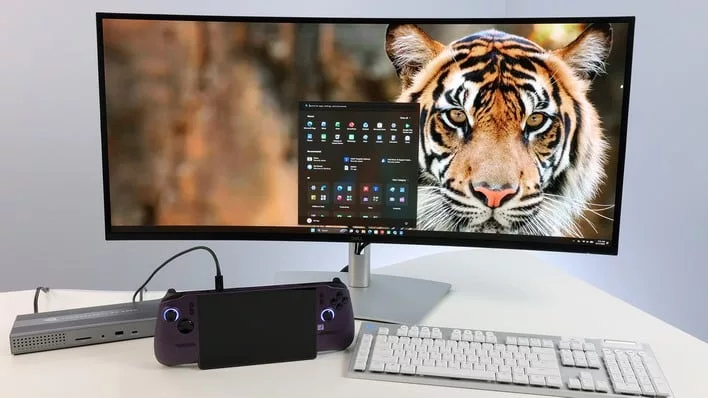
Microsoft is lifting the restrictions on its AutoSR spatial upscaling technology as it moves out of its beta phase. Originally introduced with the Snapdragon X Elite-based Copilot+ PCs in 2024, AutoSR is a game-agnostic solution that offloads upscaling tasks from the GPU to the system's NPU. While the technology showed promise during its preview on the ASUS ROG Ally X, it was hampered by significant limitations for handheld users—limitations that are finally being addressed.
The most significant update for handheld enthusiasts is the ability to use AutoSR while playing in handheld mode on the device's internal screen. Previously, this was a major oversight for a technology intended for mobile gaming. However, there is a technical caveat: to utilize AutoSR on an internal display, users must set the game's rendering resolution to 720p. Unlike FSR, which works by upscaling a lower-resolution internal render, AutoSR operates on the finished image after the frame has been rendered. While this allows it to work with almost any title, it can lead to visual artifacts on HUD and UI elements.
Expanded Resolution and HDR Support
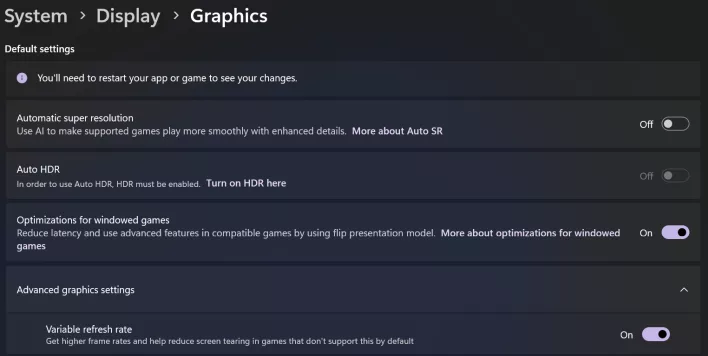
For users connected to external displays, AutoSR now supports games running at 1080p, provided the monitor has a higher resolution. Microsoft notes that performance might not be optimal in this configuration, suggesting it is best suited for older titles rather than modern AAA games. This is particularly relevant for the ASUS ROG Ally X20, where the integration of AutoSR with Auto HDR is a critical improvement. Since the Ally X20 features a high-quality HDR OLED screen, the ability to use AutoSR alongside Auto HDR—which converts SDR content to HDR—is essential for maximizing the visual potential of the hardware.
Performance Mode and Technical Ambiguity
Microsoft has also introduced a new "Performance" mode for AutoSR, claiming it can enable gameplay at up to 120 FPS. The exact mechanics of this mode remain unclear; since AutoSR does not change the fundamental rendering resolution like DLSS or FSR, it likely utilizes a lightweight upscaling model to reduce the workload on the NPU. While the rollout has begun, the staggered nature of Windows Updates means many users, including the author, have yet to receive the update or perform independent testing.
Despite these improvements, users should remain cautious. Previous testing of AutoSR on Copilot+ PCs revealed issues with low-quality upscaling and significant text artifacts. Furthermore, for games that support native upscalers like FSR4, those integrated solutions are generally preferred, as they render the UI at native resolution, avoiding the potential clarity issues inherent in AutoSR's post-render approach.
Гика
