
The first 1000 Hz gaming monitor is a tough sell, but I truly felt hard-wired into games
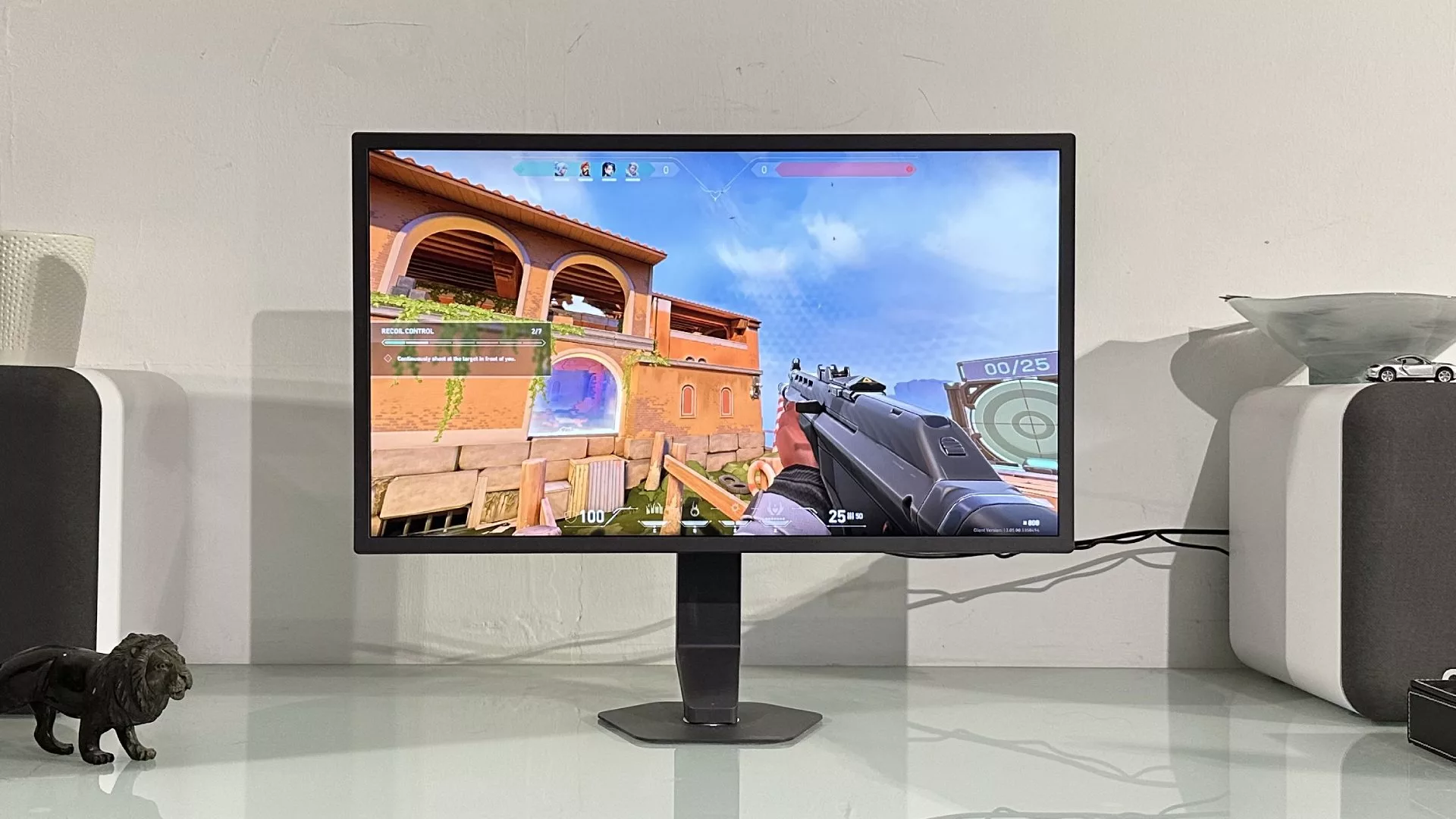
The race for higher refresh rates shows no signs of slowing down. Following the wave of 240, 360, and 540 Hz displays, LG has broken the 1,000 Hz barrier with the new UltraGear 25G590B. This is the first gaming monitor capable of hitting a full 1,000 Hz at 1080p resolution. But as we push into such extreme territory, questions arise: is the benefit worth the steep price, and can modern hardware actually keep up with such a blistering pace?
Chasing Hertz: The Specs
Beyond the headline-grabbing 1,000 Hz refresh rate, the technical specifications of the LG UltraGear 25G590B are intentionally modest. It features a 25-inch IPS panel with a 1920 x 1080 resolution and 400 nits of brightness, carrying a DisplayHDR 400 certification. This is a display built for speed, not for visual fidelity or the deep blacks found in OLED panels; it is a specialized tool where latency is the only priority.
Connectivity is a critical factor here. To achieve the full 1,000 Hz, you must use the DisplayPort 2.1 interface. Standard DisplayPort 1.4 is capped at 850 Hz at 1080p. This requirement places a heavy burden on your PC configuration, necessitating high-end hardware like AMD Radeon RX 7000 series GPUs or the latest NVIDIA RTX 50-series chips to fully utilize the monitor's capabilities.
The Bottleneck Problem
The real challenge lies in whether 1,000 Hz is actually usable in gaming. In practice, hitting 1,000 FPS is an immense hurdle. In competitive titles like Counter-Strike 2, the CPU becomes a bottleneck long before the frame rate reaches the thousand mark. Even with top-tier hardware like the AMD Ryzen 7 9800X3D, games like Valorant typically deliver between 500 and 800 FPS depending on the onscreen action.
Testing reveals that while the improvements in motion clarity when moving from 500 Hz to 1,000 Hz are measurable, they are not revolutionary. On an IPS panel, the benefits of such high refresh rates face diminishing returns, as the physical response time of the liquid crystals struggles to keep pace with the rapid frame updates.
Verdict: Who is it for?
The LG UltraGear 25G590B is undeniably a niche product. At a price point of $999 (£899), it is an expensive way to get a 1080p panel. For professional esports athletes where every millisecond of input lag matters, this monitor is a legitimate tool. It provides a sensation of being 'hard-wired' into the game engine, where the disconnect between your movement and the screen's response feels almost non-existent.
For the average gamer, however, this is a hard sell. For the same investment, one could opt for a much more versatile 27-inch 1440p OLED monitor that offers superior image quality while remaining incredibly fast. The LG UltraGear 25G590B stands as a remarkable engineering feat, but for most, it remains a high-priced technological statement rather than a practical necessity.
Гика
