K/DA's 8-Year Return and the '38-Second' Miracle: Inside the Worlds 2026 Opening Ceremony
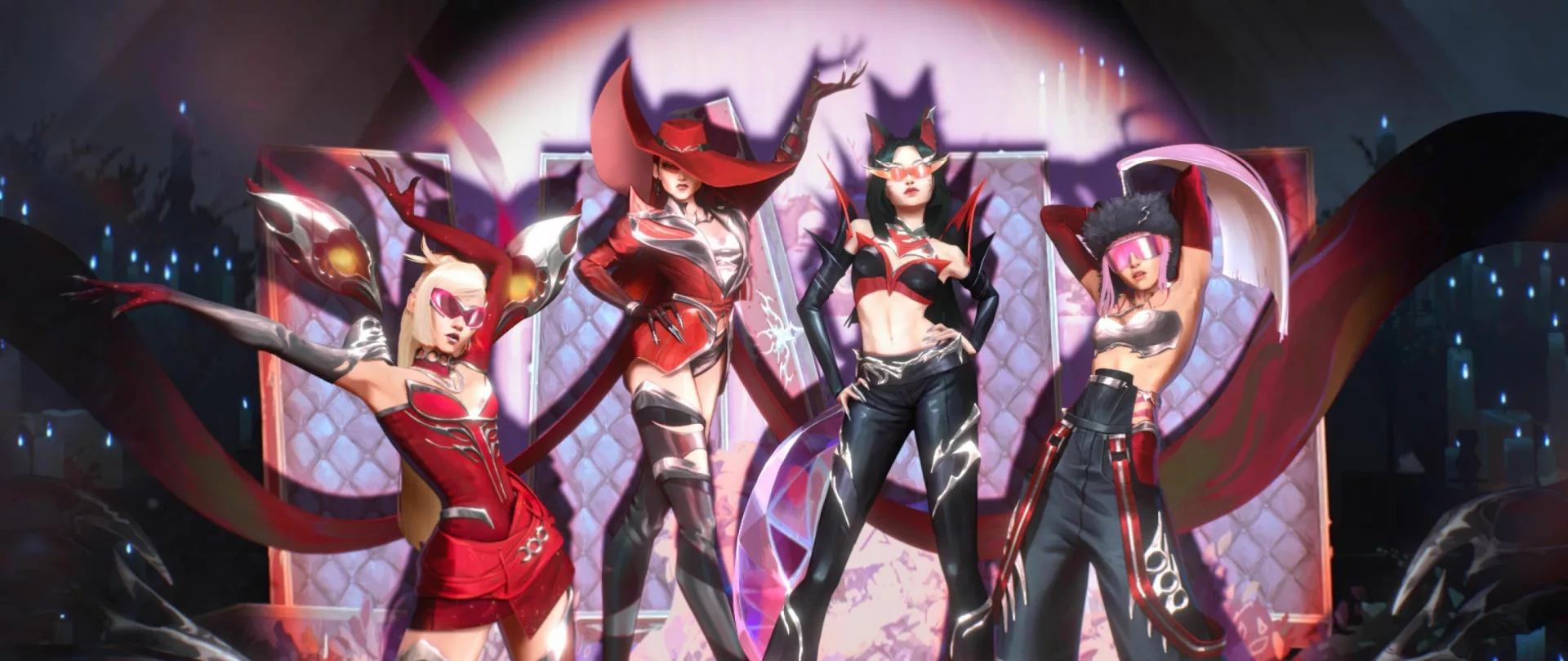
On November 14, during the 2026 League of Legends World Championship (Worlds) Finals at the Barclays Center in New York, the stage witnessed a moment eight years in the making. Soyeon and Miyeon returned to the spotlight together as members of K/DA, a performance that reaffirmed Riot Games' long-standing vision of blending champion identities with the unique charm of K-pop artists. While the world saw a seamless musical spectacle, the reality behind the scenes involved an unexpected bridge: the Teamfight Tactics (TFT) team. In this deep dive, we explore how the connection between Riot's music team and Korean artists was maintained through the efforts of TFT's Junwoo Kim and Harim Jung, covering everything from meticulous character details to the high-pressure logistics of a global opening ceremony.
The history of K/DA is deeply intertwined with the rise of (G)I-DLE's Soyeon and Miyeon. Back in 2018, Riot Games reached out to the duo when they were emerging rookie idols, leading to the massive success of the debut track "POP/STARS." This synergy was later echoed in 2023 when Riot collaborated with NewJeans for the Worlds anthem "GODS." However, the 2026 comeback was a different beast entirely, requiring a massive logistical effort to manage multiple performances, including Soyeon's appearances for both K/DA and True Damage.
The Unlikely Bridge: Why the TFT Team Was Involved
It might seem unusual for the Teamfight Tactics team to play a central role in music collaborations, but for Junwoo Kim, Riot Games TFT Korea Publishing Lead, it was a matter of long-standing professional relationships. Having worked on the original 2018 K/DA debut, Kim had built a lasting connection with the Music Team and the artists themselves. When the 2026 comeback was announced, his expertise in managing these specific artist partnerships became vital for the massive scale of the New York ceremony.
Joining him was Harim Jung, TFT Community Manager, who focused on the on-site execution. Together, they acted as a bridge between the Riot Games Music Team and the Korean artists, ensuring that the high-stakes environment of the Worlds opening ceremony ran smoothly.
Attention to Detail: From Cosplayers to Character Essence
The goal was not just to host a concert, but to create an experience where the artists felt like the champions they represented. According to Harim Jung, Soyeon and Miyeon went to great lengths to study the game and the characters to embody them fully. This dedication extended to the smallest details through community interaction.
- During a meet-and-greet with local players, the artists met a professional Akali cosplayer. Recognizing that the cosplayer's glasses were the most accurate representation of the Akali skin, both Soyeon and Riot decided to borrow them for the actual performance.
- Miyeon expressed her enthusiasm for the role by wearing Ahri's whiskers, provided by a fan, noting that she felt she had truly 'become Ahri.'
- The artists' professionalism was noted by the staff, who observed them paying meticulous attention to every dance move and tiny detail to ensure the performance resonated with players.
A Unified Vision: Music and the Future of TFT
For the Riot team, the K/DA revival was more than just a one-off event; it was part of a broader strategy where music becomes a central pillar for all Riot Games IPs. This synergy extends directly into Teamfight Tactics. Following the K/DA performance, the group's influence will be felt in-game as a trait in TFT, leading up to the launch of Set 19, which is themed around a massive music festival titled 'Prism Tour.'
This musical expansion also includes the introduction of 'Ionic Spark,' a new J-POP-based band composed of four Little Legends, including Aurora, Elise, and Briar. While K/DA represents a mature and feminine aesthetic, Ionic Spark is designed to offer a 'small and cute' charm, showcasing the diverse musical directions Riot is exploring through its various game worlds.
The magic of a Worlds opening ceremony often feels seamless, but behind the curtain lies a complex web of casting decisions, long-term artist relationships, and high-pressure logistics. In a recent discussion, Riot Games' creative leads shared the intricate details of how they bridge the gap between virtual champions and real-world musical icons, specifically focusing on the legacy of K/DA and the strategic selection of K-pop talent.
The Art of the Perfect Match: Casting (G)I-DLE
One of the most significant milestones in Riot's musical history was the collaboration with (G)I-DLE for the "POP/STARS" era. Lead Junwoo Kim revealed that the decision to cast Soyeon and Miyeon wasn't based solely on rising popularity, but on how their specific talents aligned with the essence of the champions. At the time of their debut, the team engaged in heavy internal debate to find artists who could embody the characters' identities.
- Soyeon was selected for Akali due to her rap proficiency and intense performance style, traits she had already demonstrated on audition shows.
- Miyeon was chosen for Ahri because her voice and presence captured the character's signature feminine and alluring beauty.
- The synergy was so effective that the collaboration became a win-win, providing the artists with a massive global stage while fulfilling Riot's vision for the virtual group.
The 38-Second Transformation
Beyond the casting, the technical execution of the ceremony requires precision that borders on the impossible. Manager Harim Jung highlighted a standout moment from the recent production: the transition between the K/DA and True Damage stages. During the ceremony, Soyeon had to undergo a complete wardrobe change to transition between the two distinct thematic universes.
The window for this transformation was a mere 38 seconds. This feat was made possible by a coordinated effort between the wardrobe team, the artist, the stage staff, and Cube Entertainment. The high-stakes nature of the transition—where any delay could have disrupted the flow of the entire show—remains one of the most memorable logistical triumphs for the production team.
Looking Ahead: The Future of K/DA and K-pop Collaborations
As K-pop continues its global expansion, Riot Games sees increasing potential for international collaborations. While specific names for future projects remain unconfirmed, the focus remains on finding artists who can authentically represent the game's universe. For the creators, the success of the recent K/DA comeback—which saw Soyeon and Miyeon returning to their roles eight years after their initial connection—serves as a testament to the enduring power of these virtual identities.
While the future of K/DA is not explicitly guaranteed, the positive reception from the community suggests that the door remains open. As long as the collaborations prioritize the player experience and the musical quality remains high, the synergy between Riot Games and the global music scene is expected to grow.
The spectacle of a League of Legends World Championship opening ceremony is often viewed as a seamless fusion of music, light, and technology. However, the reality behind the curtain is a complex orchestration of timing and high-stakes execution. One of the most discussed elements in recent years has been the return of K/DA, a virtual group that has become a cornerstone of Riot Games' multimedia strategy. Understanding the scale of this production requires looking beyond the stage to the technical precision that defines modern esports entertainment.
The Evolution of K/DA
K/DA is not merely a musical act; it is a multi-layered brand integration that bridges the gap between in-game skins and mainstream pop culture. Over the years, the group has transitioned from a digital novelty into a global phenomenon. The challenge for production teams is to maintain the momentum of this brand while ensuring that the virtual avatars feel present and impactful during live broadcasts. This requires a sophisticated synchronization between live performers and pre-rendered digital assets, a feat that leaves zero margin for error.
The '38-Second' Miracle
In the high-pressure environment of a live broadcast, timing is the ultimate enemy. The concept of the '38-second miracle' refers to the critical window of technical execution required to transition between live stage elements and augmented reality (AR) sequences. During the Worlds opening ceremony, there is a specific, incredibly narrow timeframe where the physical lighting, the motion capture data, and the digital projections must align perfectly. If the synchronization slips by even a few seconds, the illusion of the virtual idols appearing on stage is broken, potentially disrupting the entire broadcast flow.
This technical feat is not just about visual flair; it is about managing the latency and rendering requirements of massive-scale AR. The production must account for the physical movement of performers on stage and map digital overlays to their exact positions in real-time. The 'miracle' lies in the fact that despite the immense complexity of the data being processed, the audience perceives it as a fluid, natural occurrence. This level of precision is what separates a standard concert from a world-class esports spectacle.
Technical Complexity and Production Stakes
The scale of the Worlds production involves a massive collaboration between Riot Games, specialized VFX studios, and broadcast engineers. Every element, from the lighting cues to the audio spatialization, is choreographed to support the narrative of the ceremony. The stakes are exceptionally high: millions of viewers are watching simultaneously, and any technical glitch is immediately visible. The success of the K/DA segments and the seamless transitions that define the ceremony are the result of months of testing, rigorous rehearsals, and a deep understanding of how to blend the physical and digital worlds.
- Synchronization of live stage movement with AR overlays.
- Management of high-latency digital rendering for real-time broadcast.
- Coordination of lighting, audio, and visual assets within millisecond windows.
- Integration of virtual brand identities like K/DA into live physical environments.