

Intel PresentMon 2.6: 78% lower CPU usage and new overlay
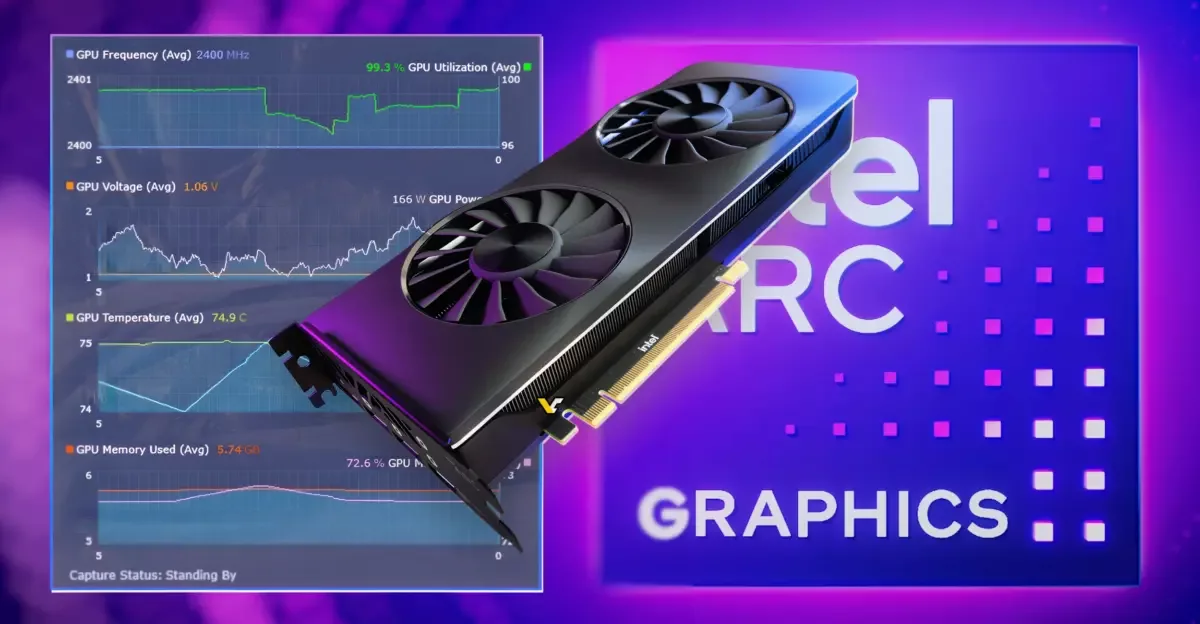
Intel has released version 2.6.0 of PresentMon, a free performance monitoring tool. This major update focuses on significantly reducing the tool's own impact on system resources and introducing new telemetry aimed at analyzing game animation and motion quality.
Reduced CPU Overhead
A common drawback of real-time monitoring is the performance penalty it imposes on the CPU. To combat this, Intel has implemented less aggressive timing for ETW (Event Tracing for Windows) flushing and background loops. By moving away from high-precision timers in scenarios where they aren't strictly required, the company reports a 78% reduction in CPU usage under load, a benefit that is particularly significant for mobile platforms. Additionally, idle CPU usage for diagnostic log flushing has dropped from 0.003% to effectively 0.000%.
The telemetry architecture has also been refined to be more efficient. The system now uses a targeted polling model, meaning PresentMon only requests and processes the specific metrics that a client is actually consuming, preventing unnecessary processing cycles.
Advanced Gaming Metrics and Analysis
A standout feature of this release is the new Game Experience overlay preset. This mode collects specific metrics that Intel claims correlate with how users perceive motion and animation smoothness in games. To improve usability, the interface now provides feedback on metric availability; instead of simply hiding unavailable data, the tool dims the option and explains why it cannot be used (e.g., due to hardware or API limitations).
For developers and reviewers, the update brings deeper insights into DirectX 12 PSO (Pipeline State Object) compilation. Users can now track the count, duration, and busy percentage of PSO compilation, which is essential for diagnosing shader compilation stutters. Furthermore, GPU telemetry has been improved, specifically regarding AMD VRAM reporting via the ADL interface, ensuring more accurate data compared to Windows-reported values.
Despite being an Intel product, PresentMon remains a multi-vendor, open-source tool. It maintains robust support for AMD and NVIDIA hardware, including specialized support for NVIDIA's custom flip manifest to ensure accurate frame analysis on developer machines.
Гика
