Intel GPU D270 Outperforms NVIDIA RTX PRO 6000 in HPC Tasks
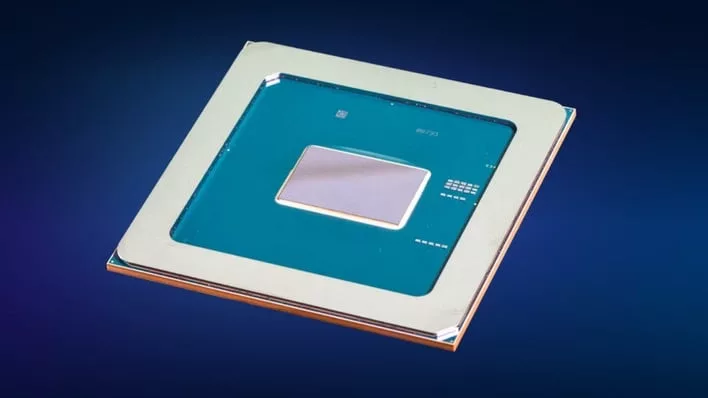
Intel is shifting the focus from traditional graphics to high-performance computing (HPC) with its latest hardware. The company's new GPU D270 is not a standard graphics card, but a specialized compute accelerator designed to tackle heavy-duty workloads. According to Intel, this 350W component can outperform NVIDIA's RTX PRO 6000 Blackwell Server Edition by up to 5.9× in specific high-performance computing tasks, such as financial services simulations and seismic exploration data processing.
The headline-grabbing 5.9× performance gap comes from direct comparisons across four different financial modeling benchmarks. These include Monte Carlo simulations (both American and European models), Binomial option pricing, and classical Black-Scholes modeling for European markets. Notably, the most significant lead—the 5.9× figure—was achieved during European Monte Carlo simulations. In contrast, the American Monte Carlo simulation, which was the slowest of the four tests, showed a 1.92× advantage for the Intel D270 on Crescent Island.
Why the gap exists: Memory and Precision
The massive performance disparity between the two accelerators stems from two primary technical advantages held by the Intel D270. First, Intel's Xe3P architecture supports full-rate FP64 (double-precision) math. This allows it to maintain high throughput during complex calculations without the massive performance penalties typically seen in NVIDIA's consumer or standard professional GPUs when handling double-precision. Second, the D270 features significantly more onboard memory: 160GB of LPDDR5X compared to the 96GB of GDDR7 found on the NVIDIA card.
Seismic Imaging and Porting Efficiency
Beyond finance, Intel is highlighting the D270's utility in seismic imaging. In a collaboration with the data company Viridien, Intel demonstrated that a seismic imaging mini-application could be ported to the D270 in less than a month. Crucially, the process required no host-side code changes and maintained both numerical accuracy and performance, though the specific performance metrics for this application were not disclosed. This ease of porting is a key part of Intel's strategy to attract developers in the scientific computing space.
Efficiency and Power Dynamics
The comparison also highlights a stark difference in power envelopes. The Intel D270 operates with a maximum package power of 350W, whereas the NVIDIA RTX PRO 6000 can draw up to 600W. While NVIDIA's card offers much higher raw compute resources, Intel is positioning the D270 as a more efficient alternative for specific tasks. Intel claims the D270 can achieve 12% higher LLM (Large Language Model) throughput at the same 350W limit and offers a 29% reduction in latency for agentic AI decision-making compared to the NVIDIA counterpart.