

Grow Home: How a Game Taught an Author to See the World Optimistically
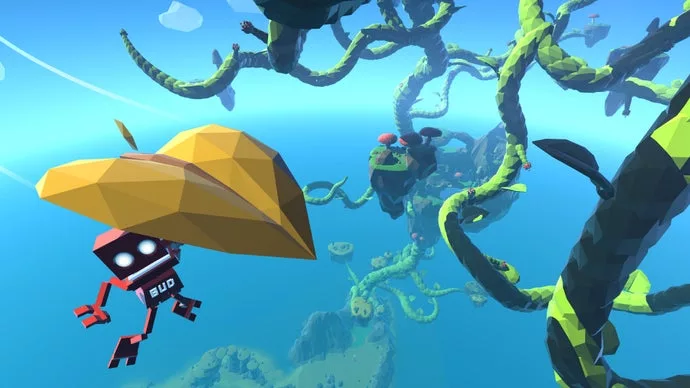
In a column published on August 19, 2026, former editor Christian Donlan shares his personal experience: Grow Home became a way for him to cope with parental anxieties and learn to see the world more optimistically.
From Anxiety to Awareness
The author describes how having a daughter changed his life: simple things became sources of fear (sharp objects, electricity, mushrooms in the woods). However, he admits that part of this anxiety was projecting his own fears onto the child. Grow Home, a platformer from Ubisoft Reflections, became a tool for working with these feelings.
The game's story revolves around a robot named BUD who must climb a giant beanstalk to reach a spaceship. The player controls the robot but also identifies with the computer on the ship, which wants to protect him. This creates an "empathic pincer maneuver": balancing safety and freedom of exploration.
The Magic Beach as a Solution
The key moment in the column is the seed mechanic. In the game, BUD must collect seeds, but when dropped, they can fly into the ocean and be lost. This reminded the author of fears of losing things (toys, money, ice cream). However, developers provided a solution: lost items resurface on the "Magic Beach" after some time.
This is not an artificial mechanic, but part of the world that makes it richer. For the author, this became an opportunity to play with his daughter, showing her the beauty of the game without fearing she would lose something important. Later, his daughter played A Short Hike herself, and the spirit of BUD supported her.
Games as Safe Cathedrals of Errors
The main takeaway from the column: games don't just simulate danger; they create safety. Bullets leave no marks, death is brief, and mistakes become part of the experience. The author calls games "bright cathedrals of errors" where every failure is explored, celebrated, and overcome.
Optimism in games is gratitude for creating worlds where one can experiment without real consequences. Even if the world is complex and harsh, games provide "bubbles of safety" to gather courage to return to reality.
Флешка
