
The 'Massively Underserved' Market: Why Dressmaker's Success Matters
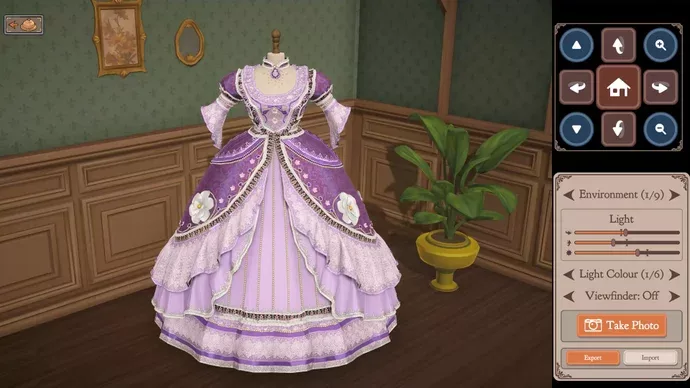
While many indie hits follow a predictable trajectory of a launch spike followed by a steady decline, Dressmaker is doing something different. The creation simulator from Free Lives has not only achieved astronomical sales but has seen its player base grow steadily weeks after its release. Its success highlights a significant gap in the gaming industry: a massive, underserved market of players—many of whom do not identify as traditional gamers—who are looking for experiences that reflect their specific interests.
Since its release on September 21, Dressmaker has become a breakout success on Steam. According to estimates from Video Game Insights, the title has sold over 482,000 units. For the South African developer and publisher Free Lives, the scale of this success was unexpected. Jonathan Hau-Yoon, a member of the Dressmaker team who previously worked on the strategy title Terra Nil, noted that while the team expected the game to perform well, they did not anticipate such astronomical numbers.
What makes Dressmaker's growth particularly notable is its sustained momentum. Instead of the typical post-launch taper, the game's daily concurrent user (CCU) count continued to climb. Data from Video Game Insights shows that from an initial day-one peak of just under 8,000 CCU, the numbers leapt to over 35,000 by day seven, and surpassed 43,000 by day 14. This growth occurred largely through organic word-of-mouth and social media sharing, without paid marketing in Western markets, though Hau-Yoon noted that some content creators in China were paid to promote the game.
Sabrina Becker, a professional dressmaker and a key member of the development team, attributes this 'snowball effect' to the joy players find in sharing their creations. The game, developed by a small team of three full-time and three part-time developers, allows for deep creative expression. This depth was evident during playtesting: among nearly 200 testers, the median playtime was 30 hours, with some players reaching over 400 hours of engagement—despite the game not containing 400 hours of scripted content.
This high engagement is often driven by community-led activities. On Discord, players have spontaneously created their own challenges and themes. One notable example mentioned by Hau-Yoon is an 'heirloom dress' project, where players pass a digital file from one person to the next, each adding their own unique touches to a single garment over generations of players.
Tapping into an Untapped Audience
The core of Dressmaker's success lies in its ability to reach an audience that the industry often overlooks. Becker recalls a conversation with the studio's founder regarding the many partners of employees who claimed they didn't play games but were eager to play Dressmaker. This realization pointed toward a massive, underserved market. While the team does not collect detailed analytics on its players, the game's social media presence is telling: 85% of its followers are women.
Becker argues that the perceived gender gap in gaming isn't due to an inherent bias against video games, but rather a lack of content that appeals to women. She points to the 1990s and 2000s, when the landscape was less divided, and games like Barbie or various dress-up titles were common. The decline of these titles, she suggests, represents a significant wasted opportunity for the industry.
Hau-Yoon believes this represents a major market opportunity that more indie studios should consider. If a game can successfully capture this demographic, the potential for scale is immense.
A Personal Genesis
The concept for Dressmaker was born out of personal necessity during the COVID-19 pandemic. Becker sought games focused on fashion and costume design to play during lockdowns, but found existing titles to be either too shallow or lacking in respect for the player's intelligence. While games like Monster Hunter World offered customization, they lacked the meticulous, step-by-step clothing construction that Becker, a real-life dressmaker, craved.
The development process was a balancing act between realism and entertainment. Hau-Yoon describes the process of creating a dress as a multi-tiered, often tedious task. The challenge for the developers was to simplify these complex real-world mechanics into a fun, engaging gameplay loop that still felt authentic to the fantasy of garment construction.
Флешка
