
Desktop GPU Shipments Hit 4-Year High Amid Price Hikes
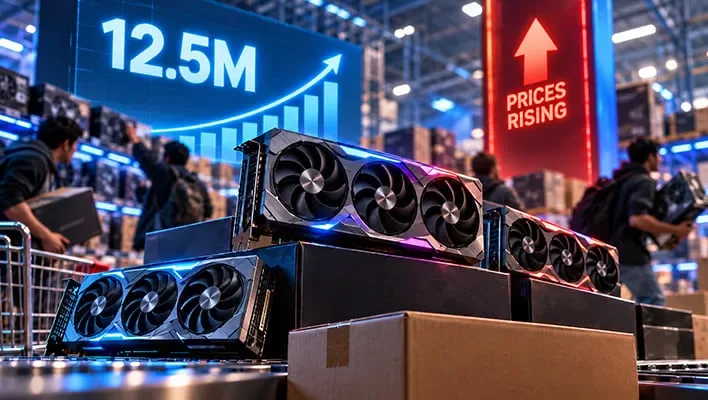
Desktop graphics card shipments hit a four-year high in Q2 2026, defying the typical seasonal slump as consumers rushed to buy hardware before anticipated price increases took hold.
According to a new report from Jon Peddie Research (JPR), add-in board (AIB) shipments jumped 10% sequentially and 6.6% year-over-year to reach 12.5 million units in the second quarter. This figure marks the highest quarterly volume for the desktop GPU market in four years, surpassing the previous peak of 12.02 million units recorded in Q3 2025. The last time quarterly AIB shipments were higher was in Q1 2022, when they peaked at approximately 13.4 million units.
The surge occurred against a backdrop of climbing retail prices and tight component supplies driven by data center buildouts for artificial intelligence. JPR President Dr. Jon Peddie noted that the AI-driven demand for key components, particularly memory chips, prompted a preemptive buying rush. Contrary to typical market behavior where higher prices suppress demand, sales of high-end graphics cards actually spiked as prices increased. Consumers appeared to scramble to secure hardware upgrades before broader price hikes became permanent.
"The reversal of a declining AIB market in 2025 raised hope and expectations, only to be whiplashed by war, memory shortage, and tariff flip-flops," Dr. Peddie said in a statement. "But then, defying common wisdom, high-end AIB sales spiked as prices increased. Our theory is consumers rushed to buy AIBs before the prices went any higher, as the war in Iran is driving prices up in all segments."
Interestingly, this GPU shipment bump coincided with a notable slump in the broader desktop PC market. Desktop CPU shipments fell 10.5% sequentially to 14 million units. The data suggests that builders and gamers are opting to upgrade existing systems rather than purchase complete new machines, a trend that may continue if GPU prices remain volatile while desktop systems see more frequent discounts.
In terms of vendor market share, the landscape remained largely stable. Intel picked up a slight 0.3% increase in market share, while AMD slipped by 0.16% and NVIDIA dipped by 0.1%. According to JPR, the overall breakdown is nearly identical to the previous quarter, indicating that the volume surge was driven by general market demand rather than a shift in consumer preference between vendors.
Гика
