
The Name Trap: Why AMD's 4-GB-Version of RX 9050 Falls Far Behind
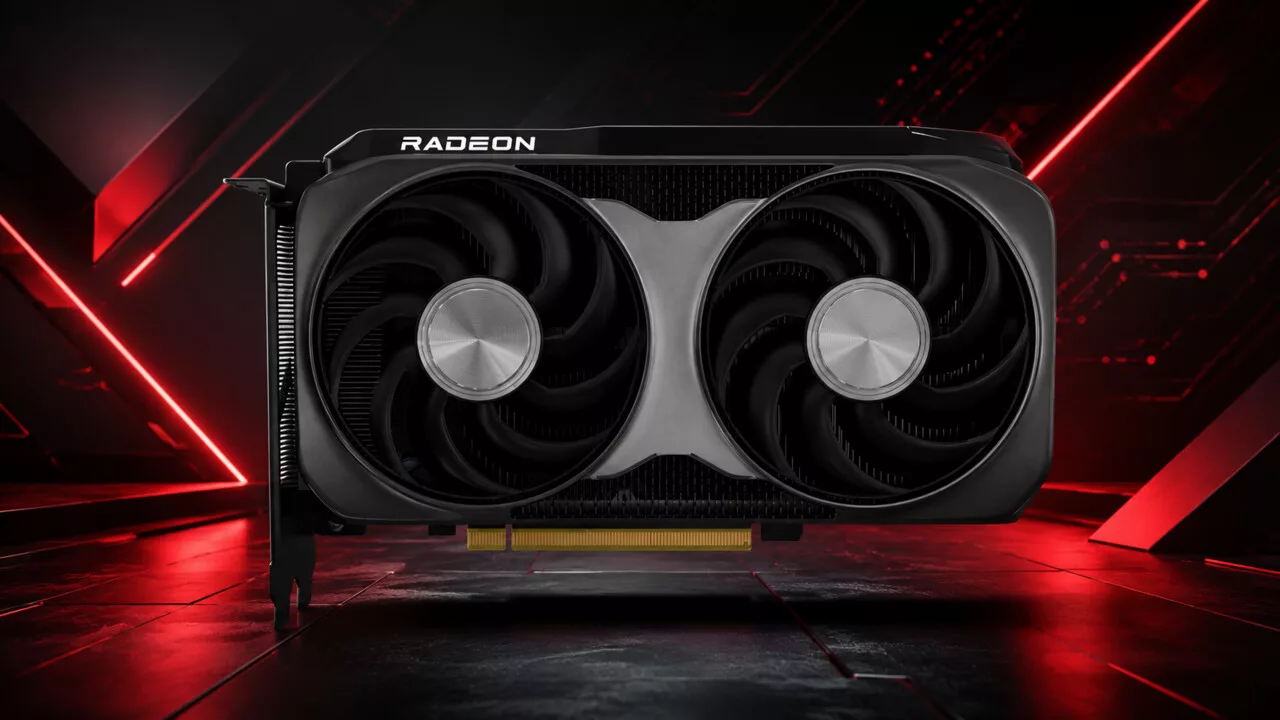
Using the same name for graphics cards with vastly different specifications is a trap for consumers. As seen with the new AMD lineup, the Radeon RX 9050 label no longer guarantees a consistent gaming experience. Recent testing reveals that the 4-GB version falls significantly behind the standard 8-GB model, and the cause goes much deeper than just having less video memory.
Performance Gap: More Than Just Capacity
According to testing conducted by Hardware Unboxed, the performance difference between the two versions is substantial. In an average of 18 games at Full HD with low settings, the 4-GB version delivers 78 FPS, while the 8-GB version reaches 107 FPS. This means the larger variant is 37% faster on average.
In certain titles, the gap is even more pronounced. In 007: First Light, the 8-GB version leads by 53%, and in Forza Horizon 6, the lead is 47%. Furthermore, the 4-GB version's average performance actually falls behind the Intel Arc B570.
Technical Details: The Halved Bus
The performance drop cannot be attributed solely to the limited VRAM capacity. When creating the 4-GB version for OEM systems, AMD also halved the entire memory subsystem. While the standard Radeon RX 9050 features a 128-bit bus with 288 GB/s bandwidth and 32 MB of Infinity Cache, the 4-GB version is significantly restricted:
- Memory Bus: 64-bit;
- Memory Bandwidth: 144 GB/s;
- Infinity Cache: 16 MB.
Crucially, the GPU core itself remains unchanged. Both versions feature 16 Compute Units and 1,024 stream processors, with a boost clock of up to 2,600 MHz and a board power of 92W. This differs from Nvidia's approach with the 6-GB GeForce RTX 3050, where they reduced CUDA cores, clock speeds, and power consumption (to 70W). In the case of the RX 9050, the performance loss is almost entirely driven by the cut-down memory subsystem despite identical compute power.
The OEM Risk
Because the 4-GB version is intended specifically for OEM systems (pre-built PCs), buyers face a potential pitfall. A system might list a standard Radeon RX 9050 in its specifications, but the actual gaming performance could be significantly lower than expected. This use of an identical model name for such different hardware makes it difficult for uninformed buyers to distinguish between a capable card and a heavily restricted one.
Дурик
