
AMD FSR 4.1.2 with Machine Learning arrives on Xbox Series
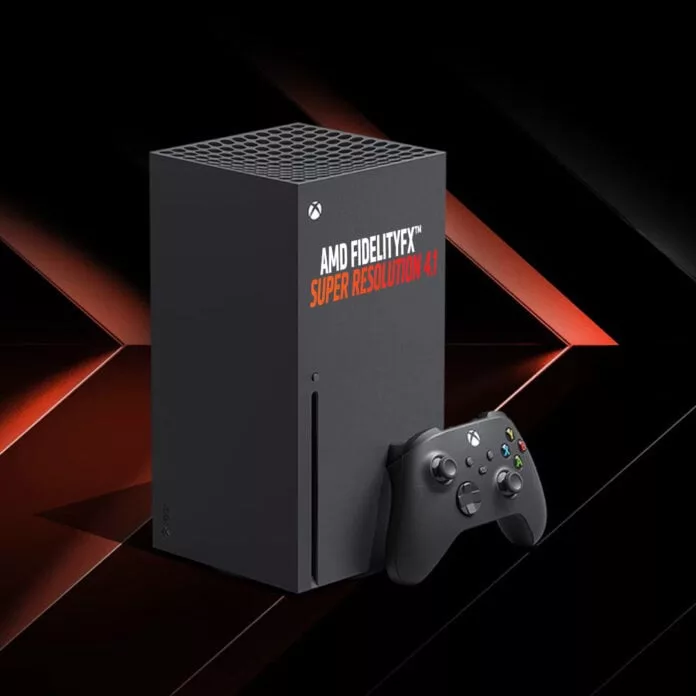
AMD has officially expanded the reach of its machine learning-based FSR 4.1.2, making the Game Development Kit (GDK) available for Xbox Series X/S consoles and ROG Xbox handhelds. This move marks a significant shift for the Xbox ecosystem, as it transitions from traditional analytic upscaling to ML-driven reconstruction, finally bringing Microsoft's hardware into direct competition with Sony's PlayStation 5, which has utilized PSSR technology since late 2024.
For years, Xbox developers have relied on standard, non-ML implementations of FSR. While functional, these analytic methods often struggle to match the visual stability and detail of modern machine learning upscalers. By providing the FSR 4.1.2 GDK, AMD is giving developers the tools to implement higher-quality image reconstruction. This could potentially allow Xbox titles to match or even surpass the visual fidelity provided by Sony's PSSR, which has been a key component in maintaining high performance without sacrificing image clarity on the PlayStation 5.
Two models for different hardware tiers
To accommodate the diverse range of hardware within the AMD ecosystem—from high-performance consoles to mobile handhelds—AMD is offering two distinct versions of the FSR 4.1.2 model:
- The full upscaling model: Based on INT8 quantization, this is the standard FSR 4.1.2 implementation designed for maximum visual quality.
- The Lite INT8 model: A new, efficiency-focused version that is half the size of the full model. It requires significantly less GPU processing time, making it specifically optimized for lower-performance hardware like the ROG Xbox handhelds.
While the models differ in computational weight, they share the same VRAM requirements. This is because memory allocation is primarily driven by the rendering and output resolutions rather than the size of the ML model itself. On Windows-based devices, such as the ROG Xbox Ally, developers can integrate this technology through the standard AMD FSR SDK.
Implementation and technical requirements
The integration process for developers remains consistent with existing PC workflows. The upscaler requires the same input data provided for FSR on PC, including jittered color, depth, and motion vectors. Developers also have the option to include a reactive mask, as well as transparency and composition masks. The available quality modes—Native AA, Quality, Balanced, Performance, and Ultra Performance—are expected to mirror those found on PC, though it remains to be seen whether these will be user-adjustable in the final console implementations.
The rollout of FSR 4.1 to Xbox consoles follows the recent arrival of FSR 4.1 on Radeon RX 6000 series graphics. This expansion provides a strong incentive for developers to integrate the technology, which will ultimately benefit both console and PC players. The next step depends on the industry: developers must now begin implementing the GDK into their titles, with the hope that existing games will also receive updates to leverage these improved upscaling capabilities.
Гика
