AMD Confirms Radeon Driver Vulnerability: Malicious WebGPU Shaders Can Trigger Application Crashes
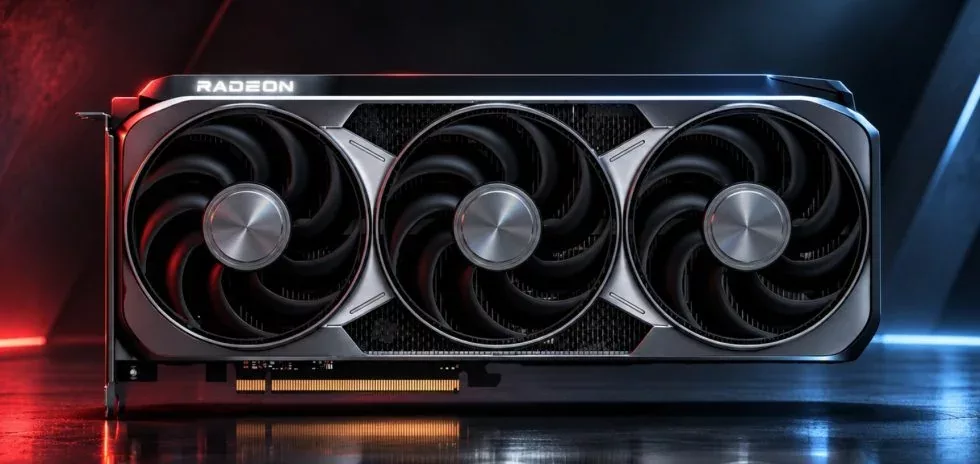
A security vulnerability has been identified in certain AMD Radeon drivers that could allow a malicious website to crash applications. AMD has officially confirmed the flaw, tracked as CVE-2026-48479, which stems from how the driver handles specially crafted shader programs via the WebGPU interface.
On November 10, 2026, AMD released security bulletin AMD-SB-4026, addressing a vulnerability that highlights a growing risk in modern web browsing: the intersection of web content and GPU acceleration. The flaw, designated as CVE-2026-48479, allows an attacker to trigger a Denial-of-Service (DoS) condition by using manipulated shaders through the WebGPU API in a web browser. While AMD has confirmed that the vulnerability can be reproduced and leads to process crashes, the company stated that there is currently no evidence of successful data manipulation or arbitrary code execution resulting from this exploit.
The Mechanics of the Exploit: Out-of-Bounds Writes
The vulnerability resides within the User-Mode drivers for DirectX and Vulkan. These components are responsible for processing graphics commands and preparing shaders—small programs executed on the GPU—for execution. While shaders are traditionally used for rendering lighting and surfaces in games, modern APIs allow them to perform general-purpose computations, such as image processing or large-scale data manipulation. WebGPU was designed to bring these high-performance compute capabilities directly to web applications.
Security researcher Michał Andryskowski from Imperial College London demonstrated that a specially crafted shader could trigger an invalid memory access within the driver. AMD has categorized this as an out-of-bounds write (CWE-787), occurring when the driver uses an uninitialized or invalid state, leading to memory access outside of intended boundaries. Because the attack vector can be initiated via a browser, a user could potentially be affected simply by visiting a malicious website, without needing to run any locally installed software.
Affected Products and Patch Discrepancies
AMD's list of affected products is more specific than the broad 'Radeon driver' label suggests. The vulnerability primarily impacts older integrated graphics and embedded platforms. Specifically, the following families are listed as affected:
Notably, current dedicated Radeon RX models are not explicitly listed in the AMD-SB-4026 bulletin. However, AMD notes that this does not constitute a guarantee for unlisted hardware; the list only includes products identified as vulnerable at this time. For the Ryzen Embedded families, security patches are expected to be released in December 2026.
A Confusing Timeline for Driver Updates
There is a notable discrepancy in AMD's documentation regarding the fix. The security bulletin identifies 'Adrenalin Edition 26.10.1' as the mitigation and suggests a release date of November 2026. However, the official release notes for Adrenalin Edition 26.10.1 are already dated October 20, 2026. This suggests that the driver version was released before the security bulletin was published, or that the fix is being distributed through a specific driver branch not explicitly detailed in the public advisory. Furthermore, the October 20 release notes do not explicitly mention CVE-2026-48479, meaning users should verify their specific driver version to ensure the fix is actually included.
The vulnerability, identified as CVE-2026-48479, specifically targets the way drivers handle WebGPU shaders. While the confirmed impact is limited to reproducible application crashes, the nature of the exploit—using web-based content to trigger driver-level failures—highlights a growing attack surface for modern web applications. It is important to note that there is currently no evidence to support claims that this vulnerability allows for full system takeover; the documented damage is restricted to stability issues.
Embedded Systems and Long-Term Risks
The situation is particularly critical for embedded platforms, such as industrial controllers and custom computing systems, which often run unchanged for years. AMD has not yet specified exact version numbers for security patches targeting Ryzen Embedded platforms. For the R1000, R2000, V1000, and V2000 series, a release is currently scheduled for December 2026. Whether the WebGPU attack vector is practically exploitable on these devices depends heavily on their specific software configuration; a system lacking a browser or shader processing capabilities would naturally have a different risk profile than a standard desktop PC.
For laptop users, the situation is slightly more complex due to OEM-specific driver modifications. Users should monitor both official AMD security bulletins and support information from their specific device or motherboard manufacturer to ensure they receive the necessary patches.
Documentation Discrepancies and Mitigation
There is a notable lack of clarity in how AMD is communicating these fixes. For instance, a Security Bulletin issued in November 2026 lists a driver version as a planned mitigation, even though that version's release notes were already published in October 2026 without explicit mention of CVE-2026-48479. This inconsistency makes it difficult for users to verify if their current installation is actually protected.
While AMD recommends caution when interacting with untrusted web content, this is a general precaution and not a technical substitute for a driver update. While disabling WebGPU in browsers could theoretically reduce the attack surface, there is no blanket recommendation to do so for all Radeon users, given that the confirmed impact is limited to crashes and the list of affected products is highly specific.
AMD has officially confirmed a security vulnerability affecting Radeon drivers that could allow malicious WebGPU shaders to cause applications to crash. This flaw specifically targets the way the driver handles certain shader instructions within the WebGPU API, a web standard designed to provide high-performance graphics access directly from the browser.
The Mechanism of the Vulnerability
The issue stems from how the Radeon driver processes manipulated WebGPU shaders. When a browser executes a shader containing these specific, non-standard instructions, the driver fails to handle the execution state correctly. This failure leads to a driver-level error that results in the immediate termination or crashing of the application using the GPU, such as a web browser or a web-based application.
Impact and Scope
While the primary consequence reported is a Denial of Service (DoS) through application crashes, the vulnerability highlights a potential weakness in how web-based graphics APIs interact with kernel-mode drivers. The scope of the issue is limited to users running affected Radeon driver versions on systems where WebGPU is enabled in the browser environment.
Mitigation and Driver Updates
AMD is working on addressing this flaw through driver updates. Users are advised to keep their Radeon Software up to date to ensure they have the latest security patches. For those who cannot update immediately, disabling WebGPU in browser settings can serve as a temporary workaround to prevent the crash, though this will impact web-based graphics performance.