AGESA 1.3.0.1f Caps VCore at 1.4V for Selected Ryzen-8000-Prozessoren
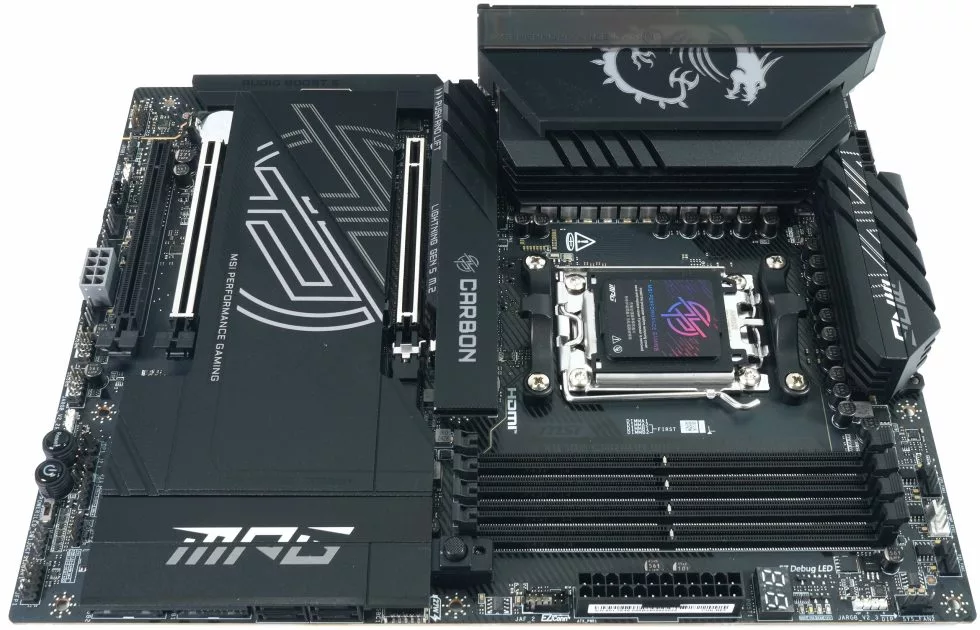
A recent BIOS update from MSI confirms that AMD is implementing a voltage cap for certain processors. Specifically, the AGESA ComboAM5 PI 1.3.0.1f Patch A introduces a 1.4V VCore limit for selected Ryzen-8000-Prozessoren, according to MSI's official release notes.
The change has been explicitly documented in MSI's BIOS release notes for several AM5 motherboards, including version 7E48v1A77, which has been available since November 17, 2026. While the presence of the 1.4V limit is now a confirmed fact, the specific technical reason behind AMD's decision remains unknown. AMD has not officially attributed this cap to stability issues, hardware protection, or any specific manufacturing defect.
Uncertainty surrounding affected models
One of the most significant ambiguities is the lack of a specific list of affected CPUs. MSI's documentation uses the phrasing "select AMD Ryzen 8000 series CPUs," indicating that the limitation does not apply to the entire lineup. Since the Ryzen-8000 series includes various products—such as desktop APUs with integrated Radeon graphics and other configurations—it is currently impossible to determine which exact models or steppings will be subject to this 1.4V ceiling.
It is important to note that a 1.4V VCore limit does not necessarily mean these processors have been running at higher voltages during standard operation. Modern Ryzen CPUs utilize dynamic voltage scaling, where voltage fluctuates rapidly based on load, temperature, and boost states. This cap is most likely to impact manual overclocking or specific BIOS-level voltage adjustments. For users running systems in standard automatic modes, the impact may be negligible unless the CPU was previously operating near or above this new threshold.
Additional changes in the AGESA update
Alongside the voltage limitation, the AGESA 1.3.0.1f Patch A update includes improvements to the DDR5 memory training process. Motherboards equipped with a Q-Code display will now show a running sequence of numbers during the training phase. This is intended to provide visual feedback, ensuring users do not mistake a long training process for a system hang or a failed POST.
For enthusiasts who actively overclock their systems, this update necessitates a re-evaluation of current settings. Users should monitor actual voltage levels and boost behavior after the update, as previously saved overclocking profiles may no longer function correctly due to the new firmware-level constraints.